Medium
Plant
CR 3
Neutral Evil
Thanomycos
Corpse-Puppeteering Fungus
A sullen, fungal horror that slimes into graveyards and battlefields, Thanomycos animates the dead into jerking marionettes whose eyes gleam with pale mycelial filaments. It does not simply raise corpses — it gardens them, threading hair-thin tendrils through mouths and spinal columns to puppeteer fallen adventurers into mimicry of their former selves. The result is a grotesque parade of familiar silhouettes moving with wrong, insectile precision, turning allies' memories into tools for ambush and mockery.
Armour
14
natural armor
Hit points
72
11d8+22
Speed
20ft
Challenge
3
700 XP
STR
14
+2
DEX
12
+1
CON
14
+2
INT
10
+0
WIS
12
+1
CHA
8
-1
Saving throws
DEX +3
Skills
Stealth +3, Survival +3
Senses
darkvision 60 ft., passive Perception 11
Languages
understands Common but can't speak
Multiattack. The Thanomycos makes two Tendril attacks.
Tendril. Melee Weapon Attack: +4 to hit, reach 10 ft., one target. Hit: 9 (2d6+2) bludgeoning damage. If the target is a Small or Medium humanoid corpse, the tendril latches; the corpse is grappled (escape DC 12) and cannot be targeted for revivify or similar magic while latched.
Puppetmaster Grasp. The Thanomycos forces one humanoid corpse within 10 feet to rise as its puppet. The corpse must be a creature that died no more than 24 hours ago and not already animated. The corpse must succeed on a DC 12 Constitution saving throw or become a puppet under the fungus's control for 24 hours. A puppet obeys simple commands from the Thanomycos and acts on the fungus's initiative, using its corpse statistics but replacing its attack rolls with +4 and dealing one additional 1d6 necrotic damage on a hit as fungal tendrils sap vitality. If the puppet takes fire or radiant damage, it and the fungus have disadvantage on the fungus's next Puppetmaster Grasp for 1 minute.
Spore Cloud (Recharge 5–6). The Thanomycos releases a choking spray of spores in a 15-foot cone. Each creature in that area must make a DC 12 Constitution saving throw, taking 14 (4d6) poison damage on a failed save, or half as much on a success. A creature that fails the save is also exposed to lingering spores: it has disadvantage on Death saving throws and ability checks to interact with corpses for 1 hour unless it is treated with a successful DC 10 Medicine check or magical healing (such as lesser restoration).
Thanomycos is thought to be a degeneration of old mycelial spirits that once fed on rot; where those spirits preserved balance, Thanomycos corrupts it, seeking mobility and intelligence by lashing itself to the dead. It favors old battlegrounds, plague pits, and the basements of long-deserted temples where corpses lie plentiful and unattended. Local folklore knows it by many whispers — 'the spinebinder' among gravediggers, 'the mimic-root' among woodcutters — but few have studied it closely without losing something in the bargain. Scholars at the Hallowbind Library recorded the first formal case study by Archivist Brenn, who found an entire scouting party walking into a swamp under the fungus's control and whispering the party's private passwords to lure rescuers into a trap. The Gorthnell Barrows now harbor the largest known colony, defended by puppet sentries that mimic fallen wardens. Hunters who seek Thanomycos learn to burn and unearth rather than cut: the fungus's filaments cling to bone and muscle, and attempts to simply sever a puppeted corpse often produce a burst of infective spores that create new 'children' from nearby cadavers.
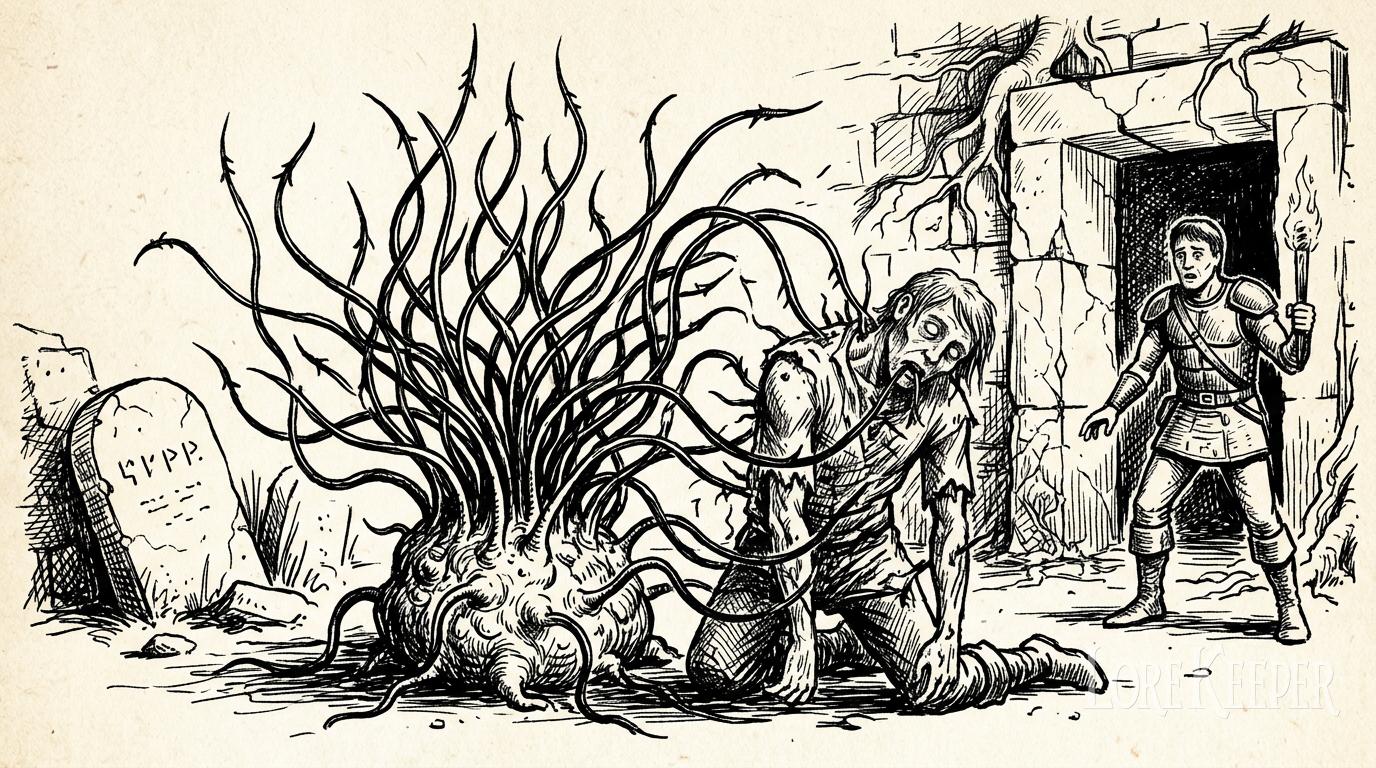
Imagine a squat, moss-dark knot of congealed fungal flesh roughly the size of a large dog, anchored to soil by a ragged mat of root-like mycelium. From that knotted bulb unfurl dozens of hairlike tendrils — translucent pale gray with faint, blue-green veins of luminescent spores — each tipped in a barbed filament that pierces bone and sinew. Between the tendrils are scales of papery cap tissue, flecked with rust-colored spores that dust the air when the fungus is disturbed. When it puppeteers a corpse, the tendrils snake along the spine and into joints, glowing faintly where they attach; the corpse's eyes take on a milky, reflective sheen and tiny fungal tendrils sprout at the corners of the mouth. Overall texture: wet, fibrous, with sections like bruised velvet and others hard like calcified cartilage. Scale reference: Thanomycos sits low to the ground about knee-high to a human, while its tendrils can extend to shoulder height of a standing human; the scene often shows ruined grave markers or a cracked temple doorway in the background.
Made with the free LoreKeeper D&D Monster Generator · D&D 5e-compatible stat block · Free to use at your table · Licence
More Plants
Thrixoril
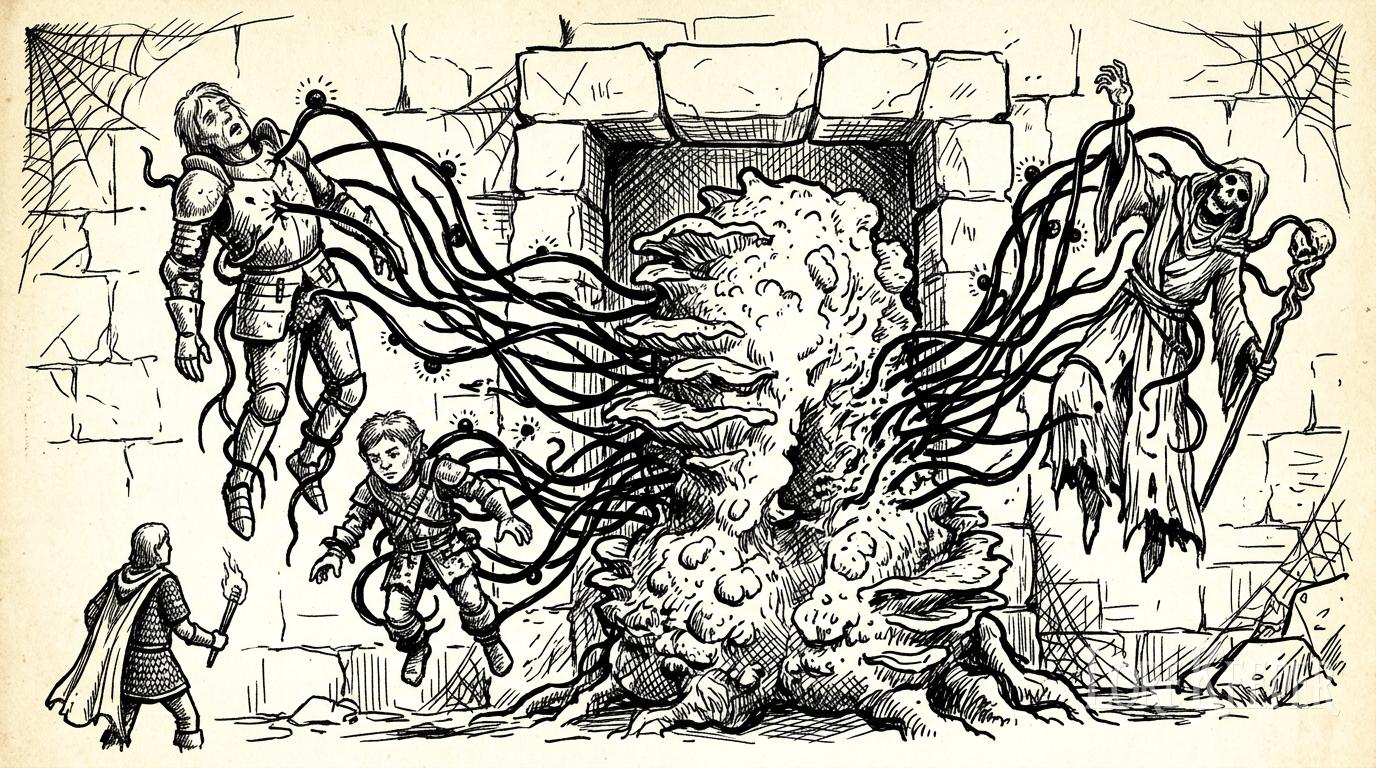
Thrixoril is a creeping, intelligence-bent fungus that animates and puppets the corpses of fallen adventurers, leaving theaters of stitched limbs and grinning helmets in its wake. Where it spreads…
Mycophylax
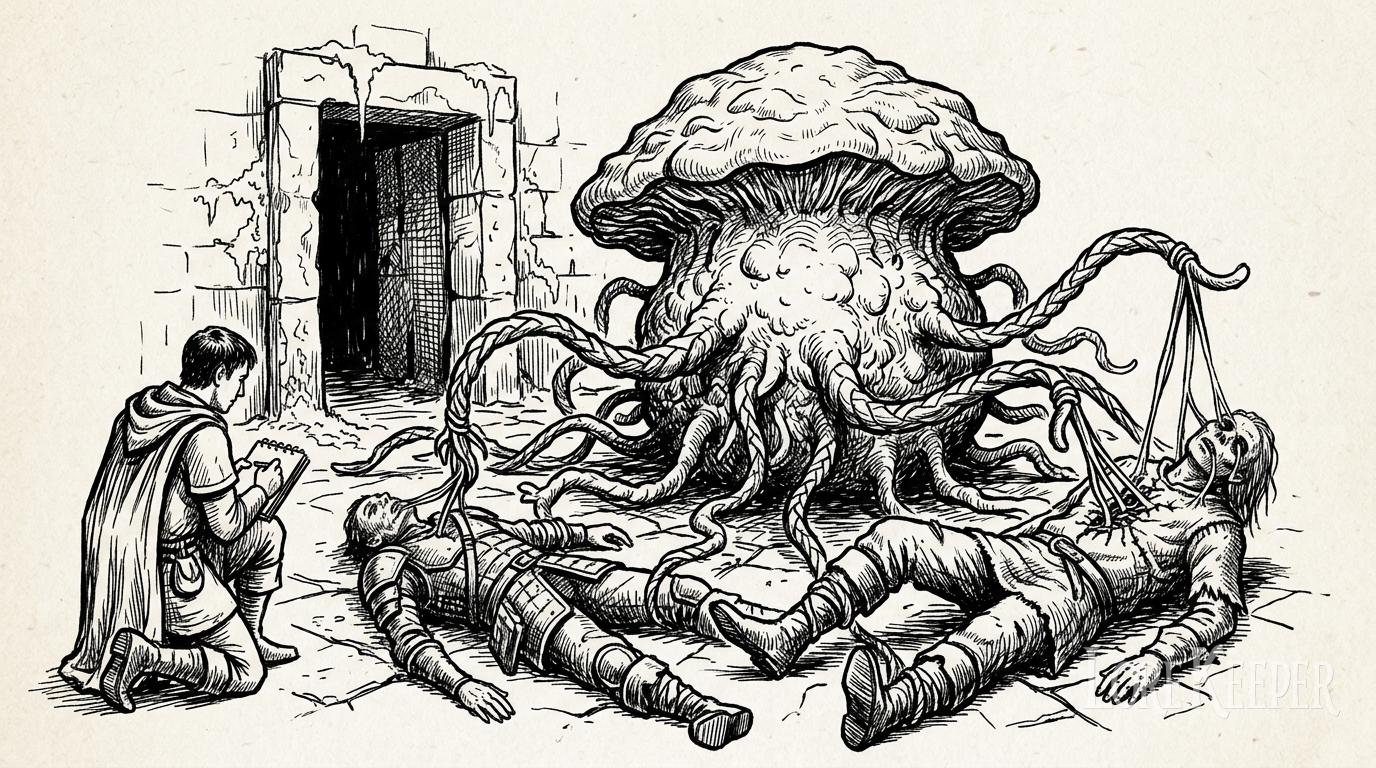
A ragged tangle of fungal tendrils and a central, bulbous cap, the Mycophylax is horrifying not for sheer size but for purpose: it seeks dead hands it can wear. When it finds a fallen adventurer it…
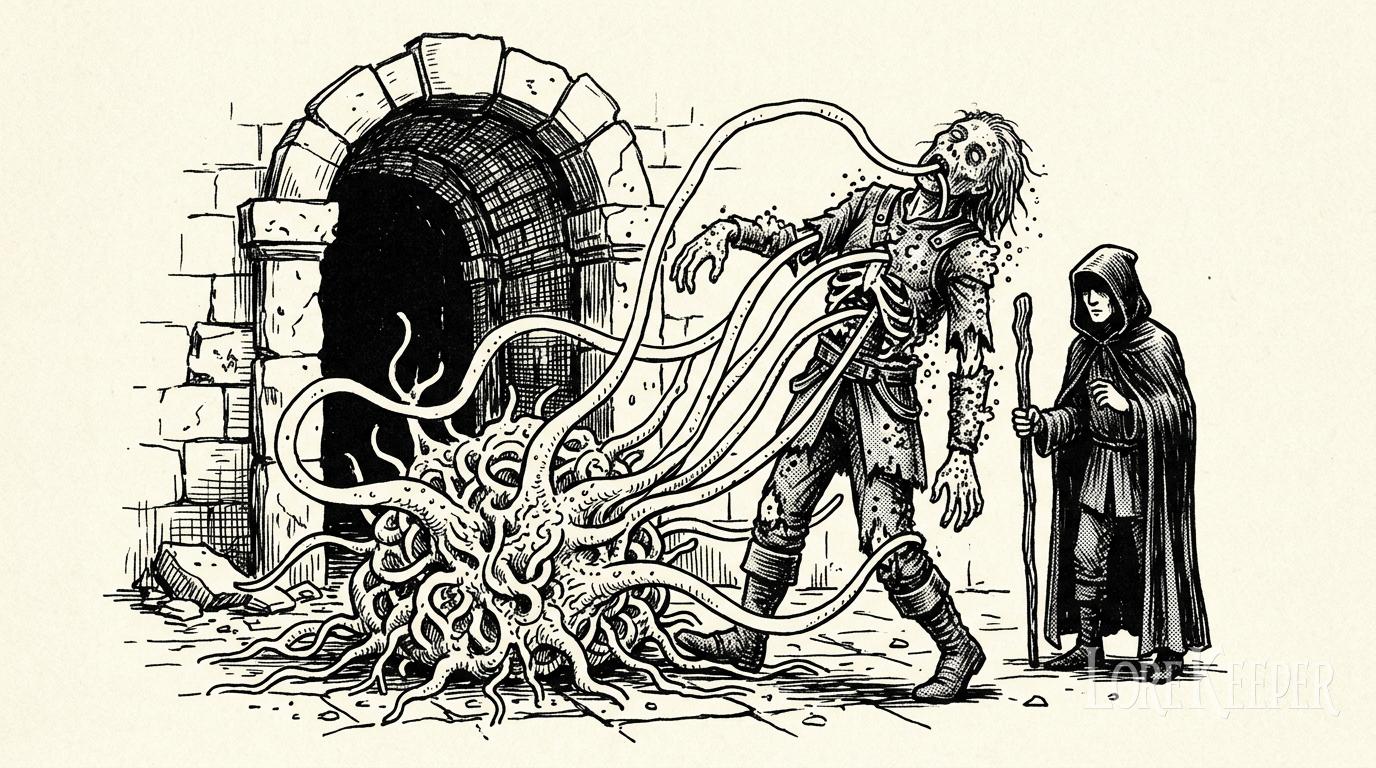
Thallok Puppeteer
A Thallok Puppeteer looks like a bruise of blackened mycelium crowned with a tangle of pale, jointed tendrils that clutch with uncanny delicacy. It drags the corpses of fallen adventurers into its…
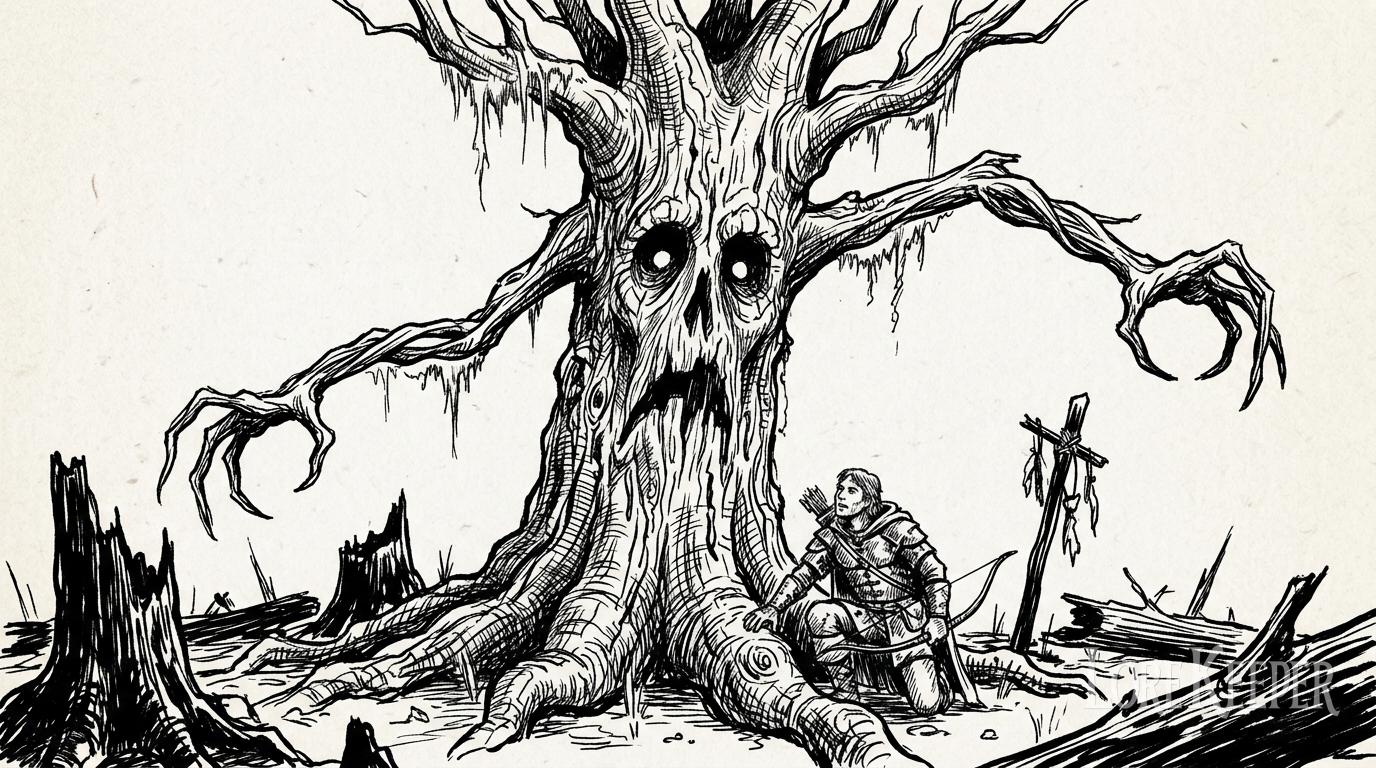
Ghrasket Rootmorne
At first glance it is an ancient tree with knotted bark and sprawling limbs — until the bark peels back like a healed mouth and a face of warped wood howls. Ghrasket Rootmorne lurches with…
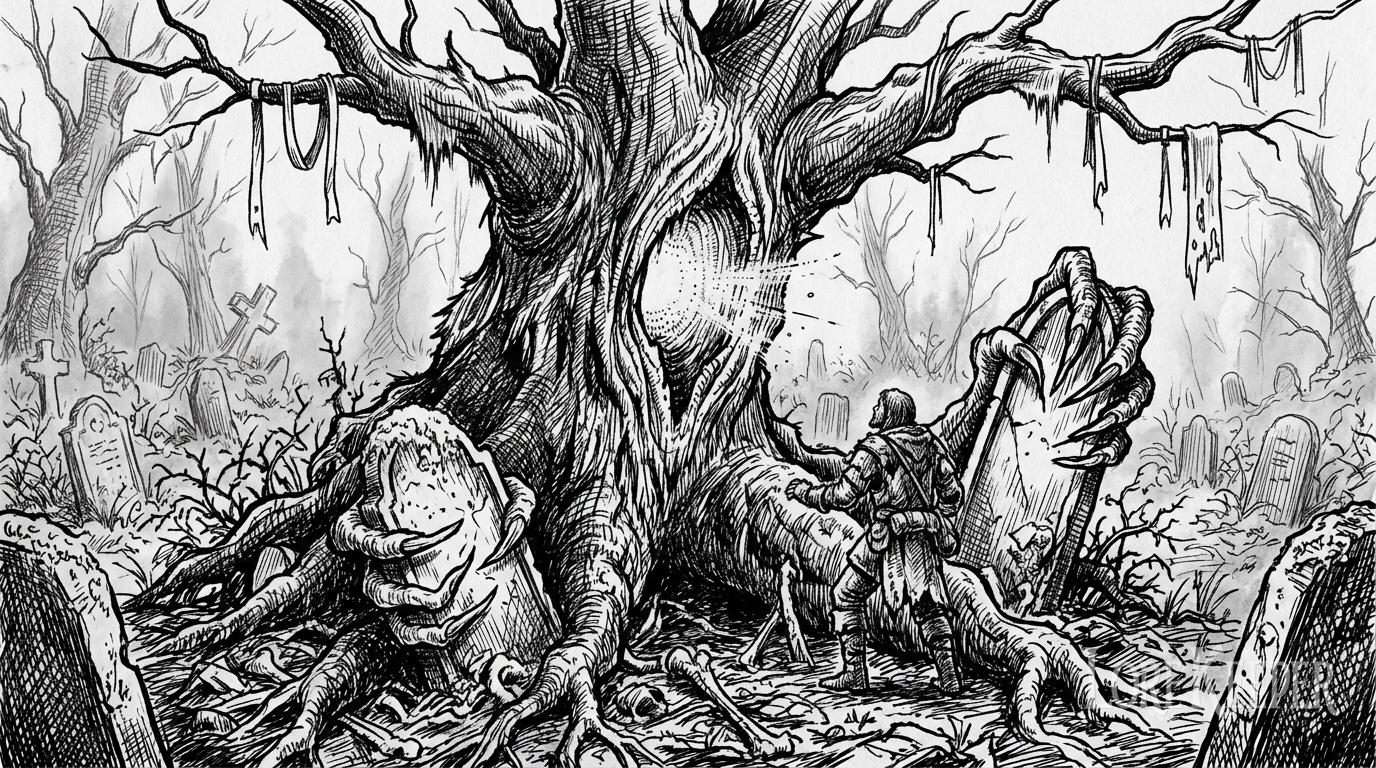
Gorvenash
Gorvenash is a hulking, sorrow-gnarled sentinel of wood and rot: a once-ancient guardian tree twisted by a funerary curse into a grim warden that binds itself to tombstones. It moves with the…
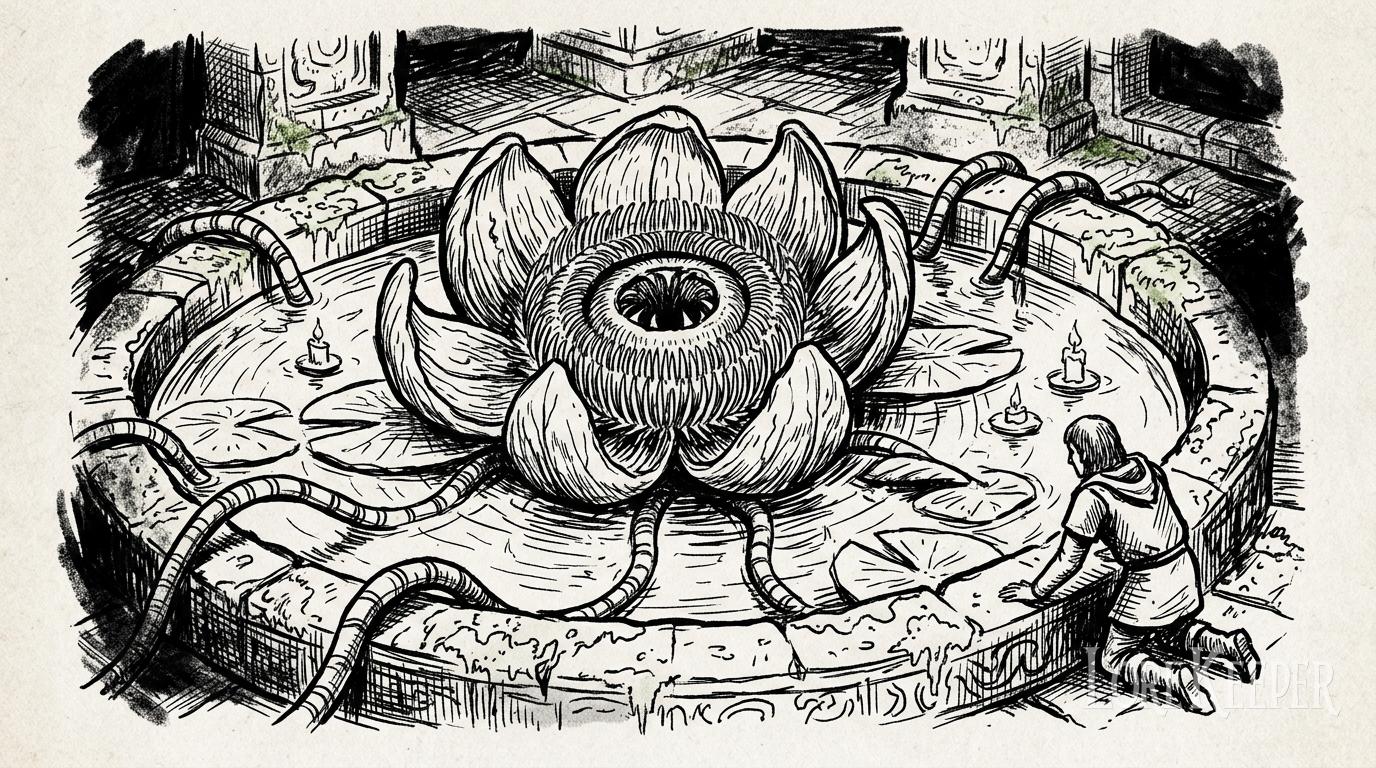
Kirisylth
Kirisylth looks at first like an overgrown ceremonial lily floating in a temple pond, but when prey draws near its glossy petals peel back to reveal a ring of serrated, toothed filaments and a…