Medium
Plant
CR 3
Neutral Evil
Thallok Puppeteer
Fungal Marionettist
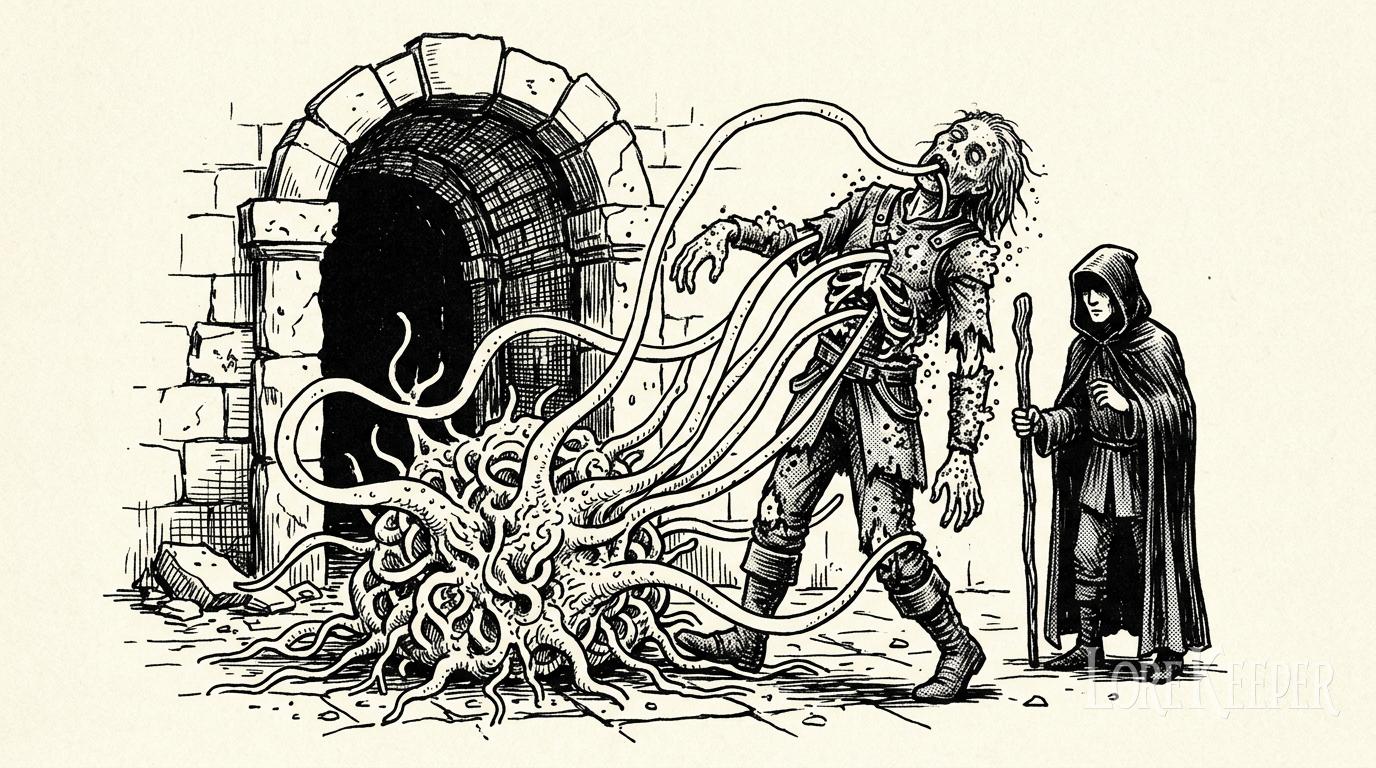
A Thallok Puppeteer looks like a bruise of blackened mycelium crowned with a tangle of pale, jointed tendrils that clutch with uncanny delicacy. It drags the corpses of fallen adventurers into its lair and threads them with living fungus; when the bodies jerk and speak with the original owner's voice, it's the fungus that speaks through them. The uncanny fidelity of mimicry—an old lover's laugh, a comrade's battle cry—makes every encounter a horror of recognition before the blades and strangling spores finish the deception.
Armour
14
natural armor
Hit points
83
11d8+33
Speed
20ft
Challenge
3
700 XP
STR
14
+2
DEX
14
+2
CON
16
+3
INT
10
+0
WIS
12
+1
CHA
8
-1
Saving throws
DEX +4
Skills
Stealth +4
Resistances
poison
Condition immunities
poisoned
Senses
darkvision 60 ft., passive Perception 13
Languages
understands Common but can't speak
Multiattack. The Thallok Puppeteer makes two Tendril attacks.
Tendril. Melee Weapon Attack: +4 to hit, reach 10 ft., one target. Hit: 9 (2d6+2) bludgeoning damage, and the target is grappled (escape DC 12). Until the grapple ends, the target is restrained and the Thallok can use a bonus action to thread a thin mycelial filament into the target's open wounds or clothing.
Sporebind (Recharge 5-6). The Thallok releases a cloud of pale spores in a 15-foot cone. Each creature in that cone that is not a plant must succeed on a DC 12 Constitution saving throw or be poisoned and begin to convulse as fungal tendrils burrow into muscle. While poisoned by these spores a creature takes 7 (2d6) necrotic damage at the start of each of its turns as the Thallok leaches vitality. A creature can repeat the saving throw at the end of each of its turns, ending the effect on itself on a success. If a creature dies while under this effect, the Thallok can spend 1 minute to connect the corpse to its network and animate it as a Puppet (see Puppet Ability).
Puppet Ability (Recharge 6). If the Thallok is adjacent to a corpse it has previously infected and has spent 1 minute binding tendrils into it, it can animate that corpse. Animated corpses obey the Thallok's mental commands and act on its turn. A Puppet uses the corpse's stat block with the following changes: it has only 1 hit die per corpse instead of its normal total, it is immune to poison, and it makes one Slam attack (Melee Weapon Attack: +4 to hit, reach 5 ft., one target. Hit: 6 (1d6+2) bludgeoning damage). If the Thallok is destroyed, any Puppets it controls immediately fall inert and the living fungal tendrils shrivel.
Thalloks are not born so much as composed: an old growth of necrotrophic fungus grafted over with opportunistic parasitic strains. They arise in battlefields, graveyards, and collapse-strewn keeps where corpses lie unattended. Over weeks a Thallok spreads a carpet of root-rhizomes into the soil, then extends delicate motor tendrils into the muscle and sinew of corpses. The fungus extracts memories stored in brain tissue and puppeteers the dead, using familiar gestures, tones, and even handwriting to lure the living close. Scholar Archivist Sinderel of the Hespian Abbey chronicled the first systematic encounters with Thalloks near the Ruins of Hestav; his grim folios describe entire militia companies routed by their own fallen captains speaking soothing orders before those captains' bodies staggered them into ambushes. The Order of Morrowfen, an itinerant mycological sect, hunts Thalloks where they infest ancient barrows, hoping to refine antiseptic salts and spores that can sterilize infected corpses. Villagers tell of 'the puppeteer's lullaby'—an imitation of a child's voice singing under moonlight—used to draw unwary villagers into root-traps.
Imagine a humanoid-sized knot of thick, rubbery mycelium—about the size of a stout person—sitting low like a warped sack. From this central mass sprout dozens of pale, segmented tendrils (each the thickness of a forearm) tipped with gripping pads and tiny sensory fronds. Embedded through the mycelial hide are black, glassy fungal eyes that weep iridescent spores. Around the base, thin rhizoids sprawl like tangled hair, staining stone and soil a rusted umber. When it occupies a corpse the tendrils thread into eye sockets, throats and finger joints; the corpse's skin stretches, dries and takes on a lichen-pallor, while the mouth moves with near-perfect imitation. Scale: the mycelial body is roughly 4–5 feet across; tendrils can reach to 10 feet. Texture notes: leathery, wet sheen on younger tendrils, papery cracked crusts where old spore-mats form; visible concentric growth rings akin to a fungus's age markings.
Made with the free LoreKeeper Monster Generator · D&D 5e-compatible stat block · Free to use at your table · Licence
More Plants
Ghrasket Rootmorne
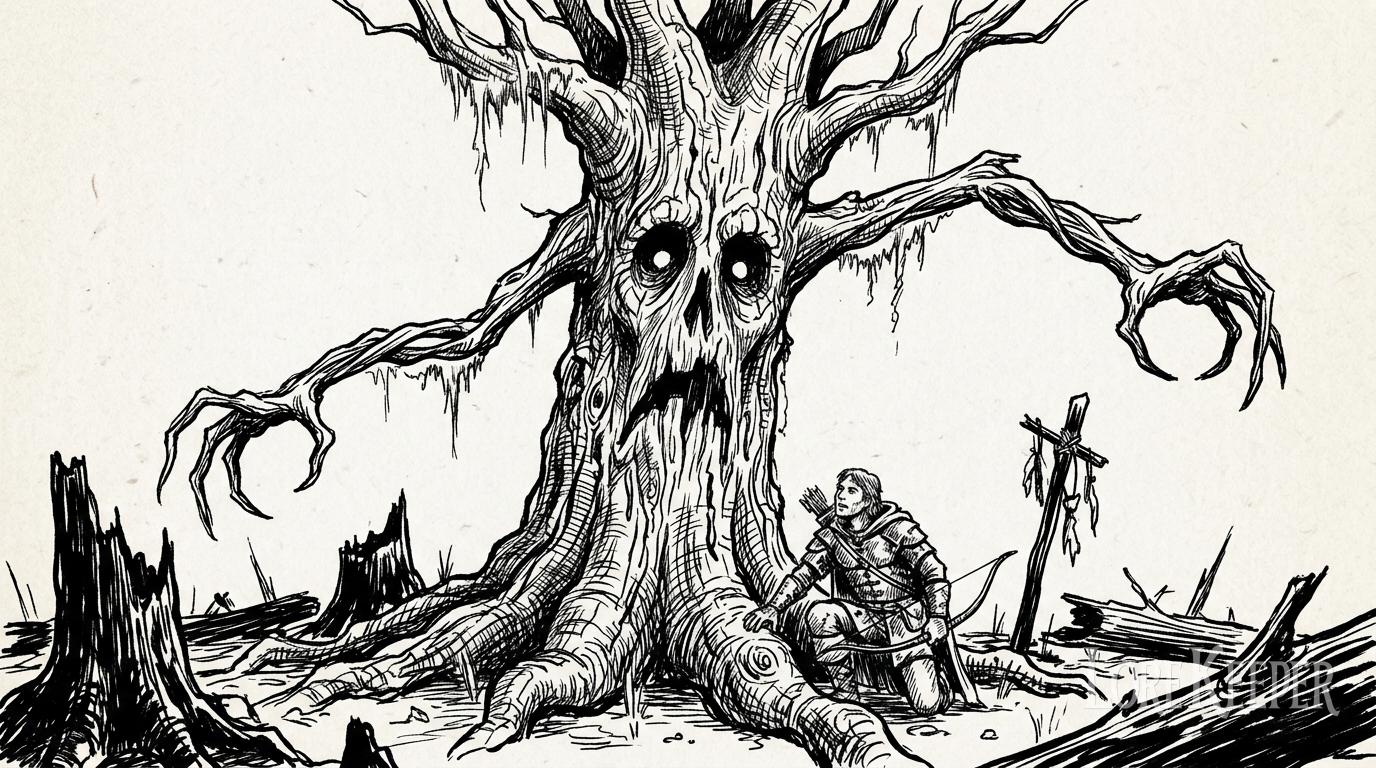
At first glance it is an ancient tree with knotted bark and sprawling limbs — until the bark peels back like a healed mouth and a face of warped wood howls. Ghrasket Rootmorne lurches with…
Gorvenash
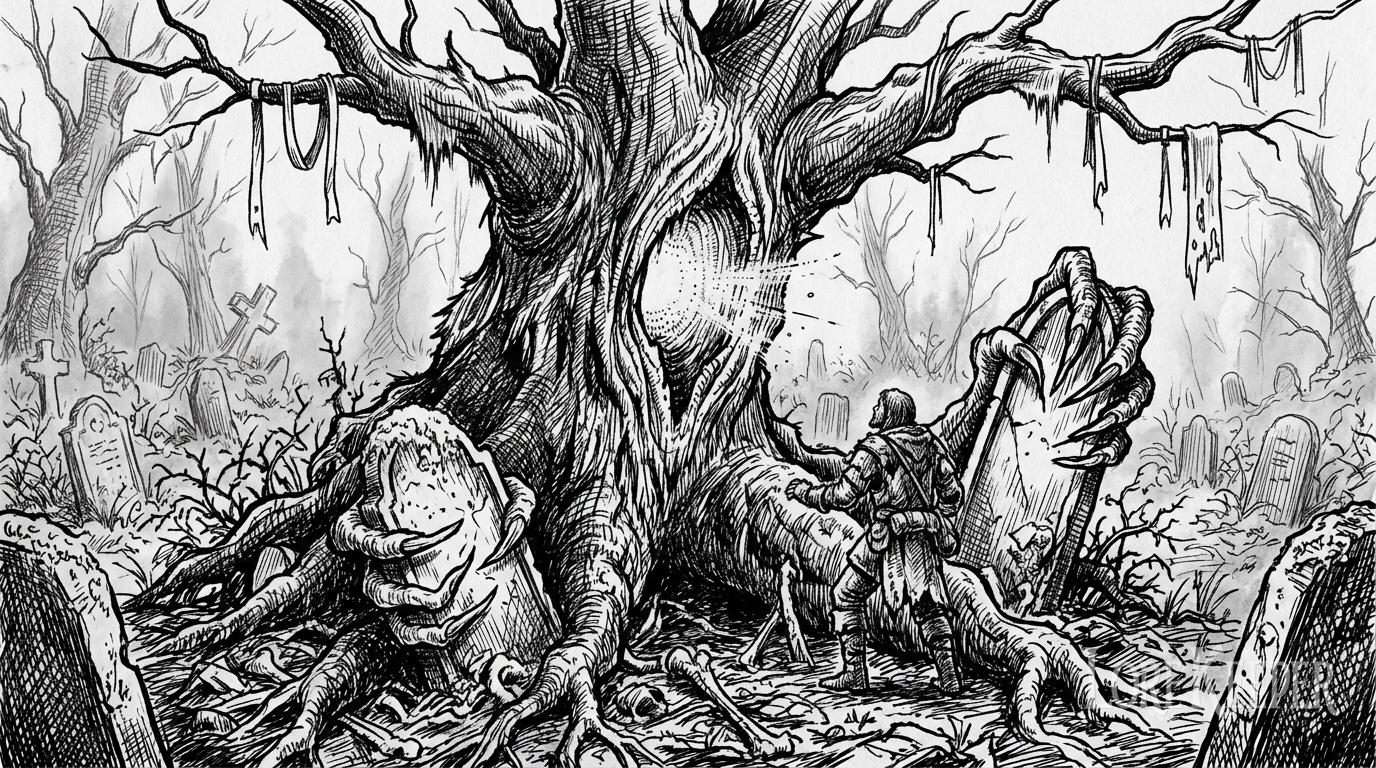
Gorvenash is a hulking, sorrow-gnarled sentinel of wood and rot: a once-ancient guardian tree twisted by a funerary curse into a grim warden that binds itself to tombstones. It moves with the…
Kirisylth
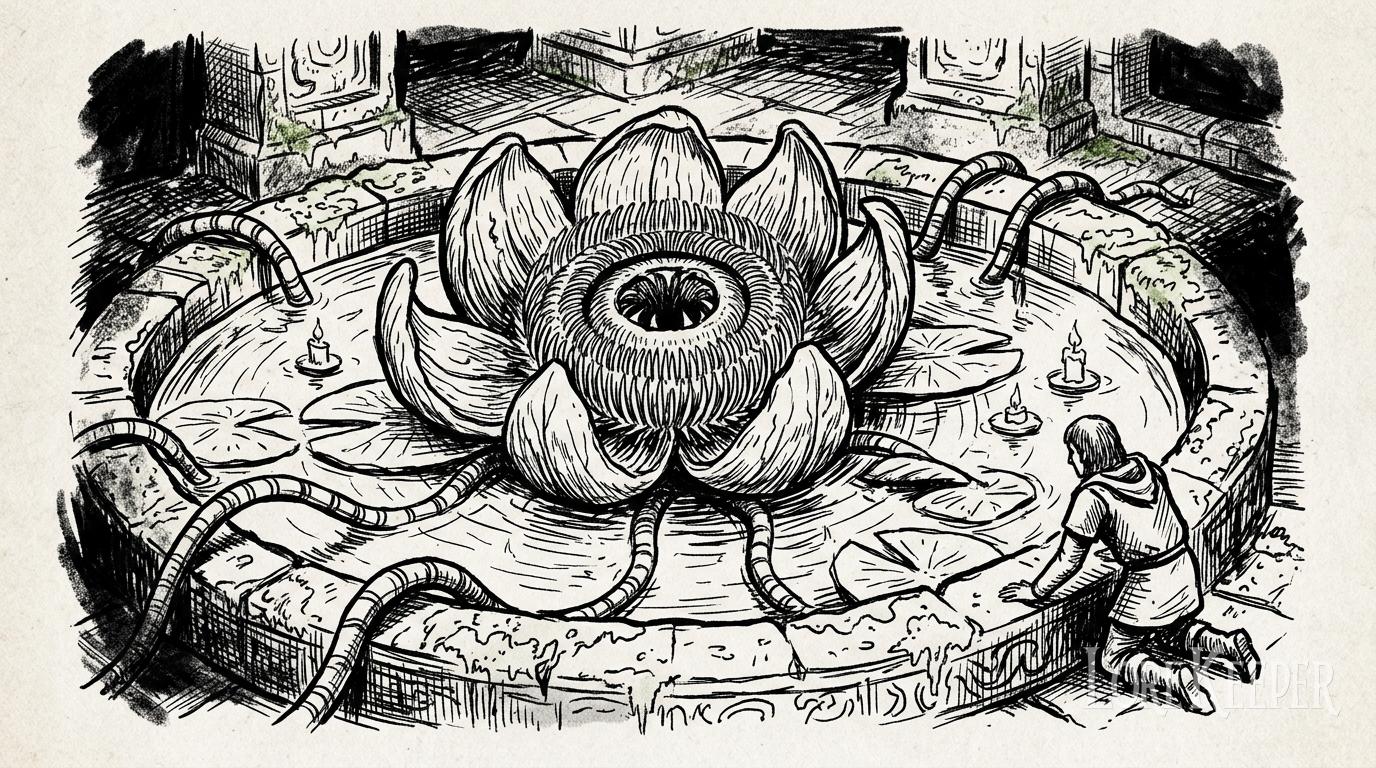
Kirisylth looks at first like an overgrown ceremonial lily floating in a temple pond, but when prey draws near its glossy petals peel back to reveal a ring of serrated, toothed filaments and a…
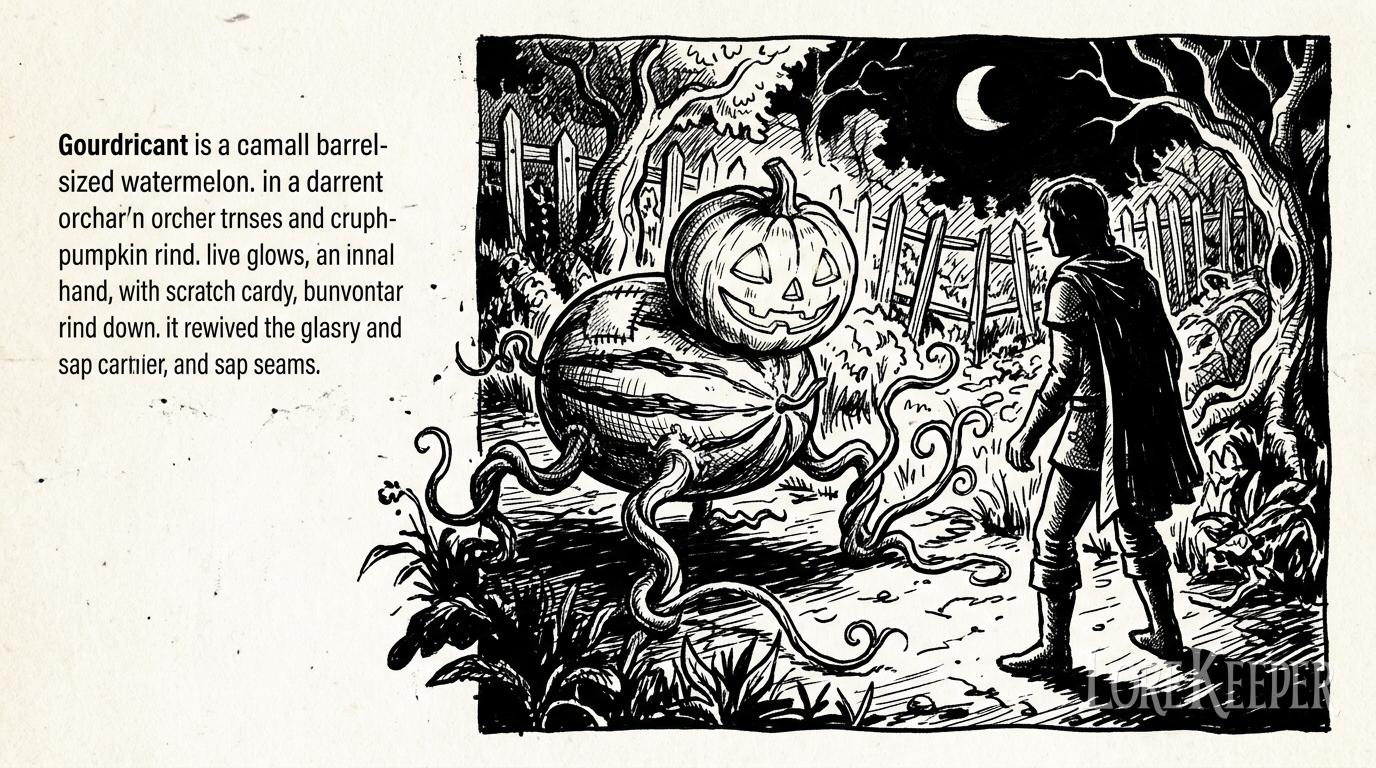
Gourdricant
A talking watermelon with a carved, flickering jack-o'-lantern for a head, Gourdricants speak with a hollow, papery chuckle as they weave simple magics. They lurch on squat vine-legs, lash glowing…
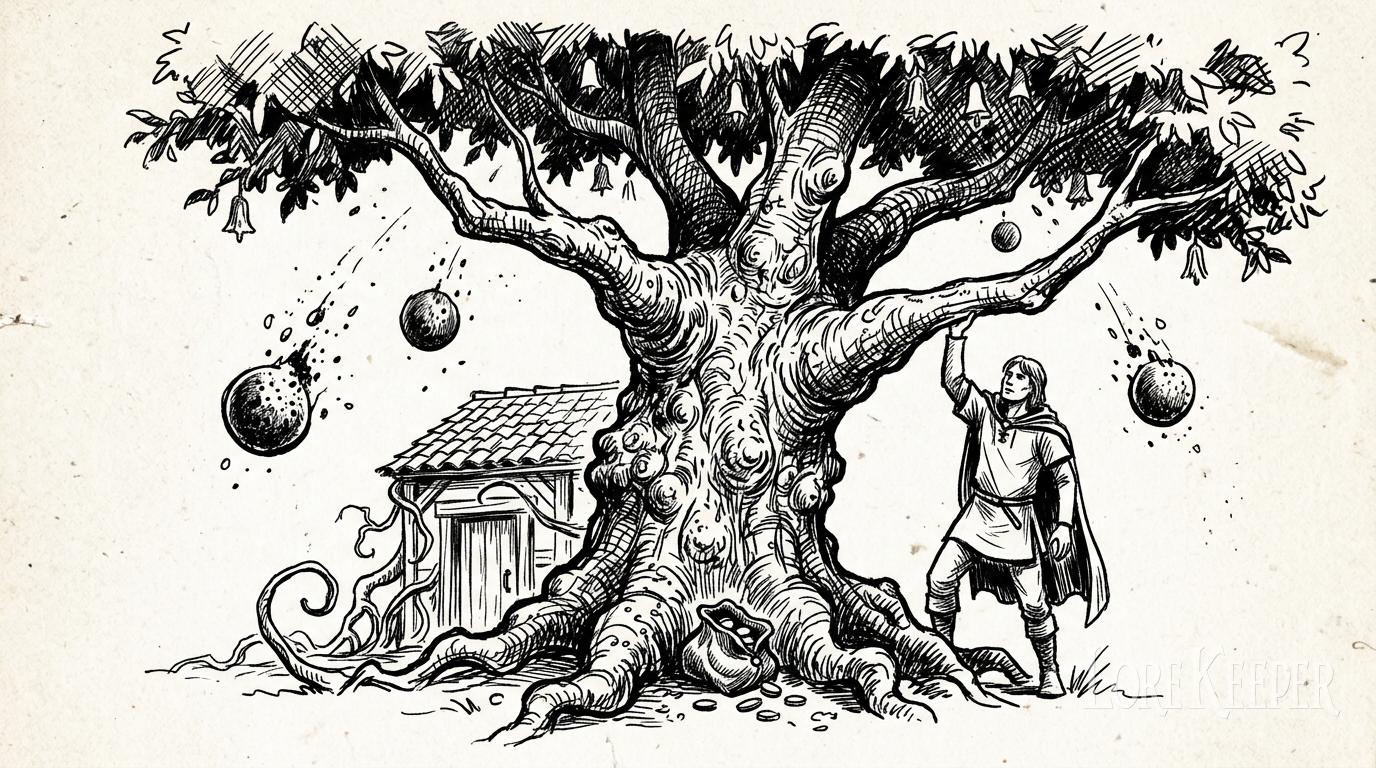
Tollroot Warden
At first glance it is a squat, knotted orchard tree; up close it watches coin pouches with patient, vegetal hunger. The Tollroot Warden drops fat, lacquered fruits only where small bells or the…
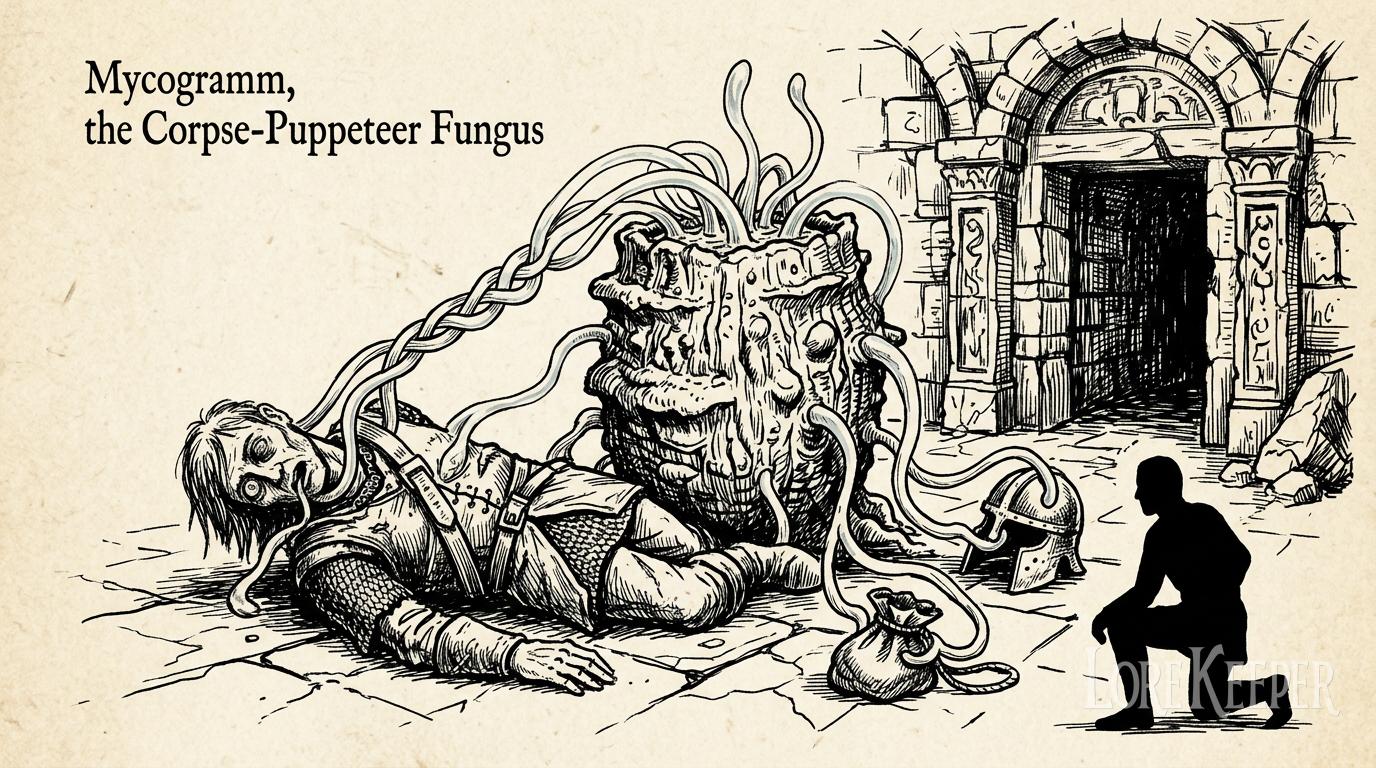
Mycogramm
A sodden, lichen-slick growth sprouting a tangle of pale tendrils and ink-dark sporopods, the Mycogramm anchors itself to a fallen adventurer and turns bone and sinew into a living marionette. Its…