Medium
Plant
CR 3
Neutral Evil
Thrixoril
Parasitic Marionettist
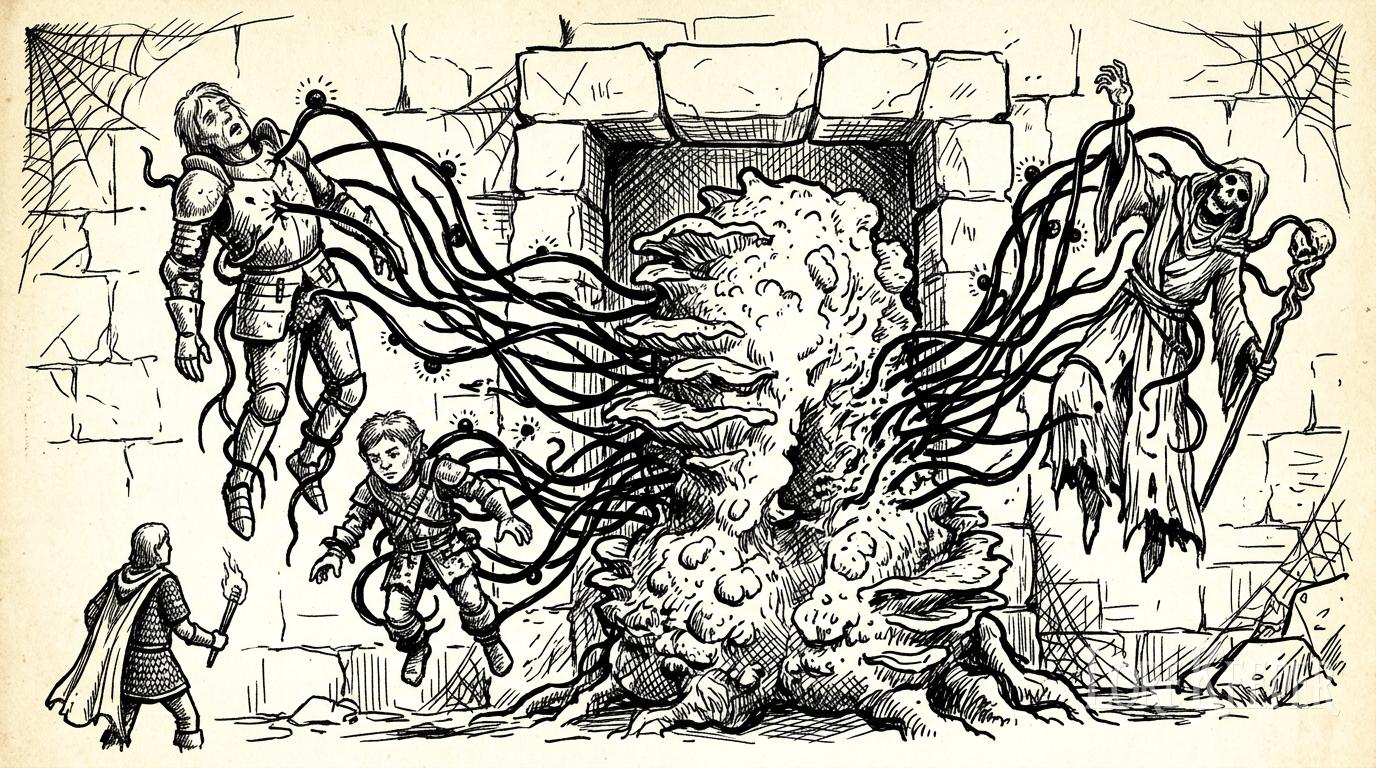
Thrixoril is a creeping, intelligence-bent fungus that animates and puppets the corpses of fallen adventurers, leaving theaters of stitched limbs and grinning helmets in its wake. Where it spreads, combatants who fell become uncanny marionettes: their armor moves with jerky precision, their blades strike with the silent efficiency of a single grotesque mind. Encountering a Thrixoril lair is like walking into a ruined stage—rows of dead bodies hung on fungal filaments, each forced to reenact long-dead conflicts under the fungus's cold direction.
Armour
14
natural armor
Hit points
90
12d8+36
Speed
20ft
Challenge
3
700 XP
STR
14
+2
DEX
12
+1
CON
16
+3
INT
10
+0
WIS
14
+2
CHA
8
-1
Saving throws
DEX +3
Skills
Stealth +3
Senses
darkvision 60 ft., passive Perception 12
Languages
understands Common but can't speak
Multiattack. The creature makes two Tendril attacks.
Tendril. Melee Weapon Attack: +4 to hit, reach 10 ft., one target. Hit: 8 (1d8+4) bludgeoning damage, and the target is grappled (escape DC 12). Until the grapple ends, the target is restrained by fungal filaments.
Puppeteer Spore. The Thrixoril releases a cloud of silver spores in a 20-foot radius. Each corpse of a Small or Medium creature and each creature that is incapacitated or dying in the area must succeed on a DC 12 Wisdom saving throw or be infected. Corpses that fail are animated as puppets under the Thrixoril's control for 1 minute. A puppeted corpse acts on the Thrixoril's turn and uses the attack stat block it had in life (if unavailable, it makes an unarmed strike: Melee Weapon Attack: +4 to hit, reach 5 ft., one target. Hit: 5 (1d6+2) bludgeoning damage). A living creature that fails the save but is not yet dead is instead stunned until the end of its next turn as spores cloud its senses. The Thrixoril can control up to three puppets at a time. The Thrixoril can end control of a puppet (returning it to a corpse) as a bonus action. The Thrixoril regains Spore uses after a short or long rest. (Recharge 5–6.)
Fungal Latch. Melee Weapon Attack: +4 to hit, reach 5 ft., one grappled target. Hit: 7 (1d6+4) piercing damage as hooked rhizoids dig into flesh or armor.
Thrixoril is not a single organism but a species of parasitic mycelium that evolved an unusual niche: it colonizes battlefields and grave sites, infiltrating corpses to harvest both nutrients and motion. Folk tales tell of a single spore-bloom called the 'Hand of Vess' that first learned to force a soldier's corpse to fetch water; modern naturalists consider that an apocryphal memory of how Thrixoril colonies occasionally develop social behaviors around moving prey. Thrixoril prefers damp catacombs and ruined fortresses where fallen adventurers gather; it sends fine, pale filaments into clothing and bone, then anchors corpses with black fungal tendrils to lairs where it rehearses and refines their movements. Scholars at the Varrun Institute for Natural Oddities catalog Thrixoril as a minor but cunning threat—one that rarely attacks directly but poses grave risk by turning a party's losses against them. The temple order of Leth-Maren records an old account of Thrixoril puppets reenacting the last moments of a temple guard before tearing the survivors apart, a tactic designed to sow terror and lure rescuers into ambush. Hunters avoid the fungus's favored haunts and burn infected remains; those who keep trophies claim a puppeted corpse is the surest omen of ill fate.
Thrixoril’s central mass is roughly the size and shape of a hunched human torso: a spongey, pale-gray mound of overlapping fungal plates that glisten faintly with damp spores. From its core radiate dozens of black, wiry tendrils—thin as twine at the tip, cable-thick near the body—each lined with tiny sucker-adhesions and bioluminescent growths that flare when it moves. The fungus anchors itself to bone and metal with flattened, adhesive rhizoids that lace into armor joints and clavicles. Its surface blooms irregularly with flat, fan-shaped caps the color of milk tea, each rim fringed with velvety filaments that release spores in gusts. Artists should show it surrounded by suspended corpses: a human in a battered breastplate, a halfling ranger with a broken bow, a robed wizard whose hood is laced in fungal threads—each corpse's limbs are connected to the tendrils as if pulled on strings. Texture references: slick, porous fungal flesh, fibrous striations on tendrils, tacky rhizoids; scale: the central mass is about the size of a large chair and several corpses hanging nearby make the scene feel claustrophobic.
Made with the free LoreKeeper D&D Monster Generator · D&D 5e-compatible stat block · Free to use at your table · Licence
More Plants
Mycophylax
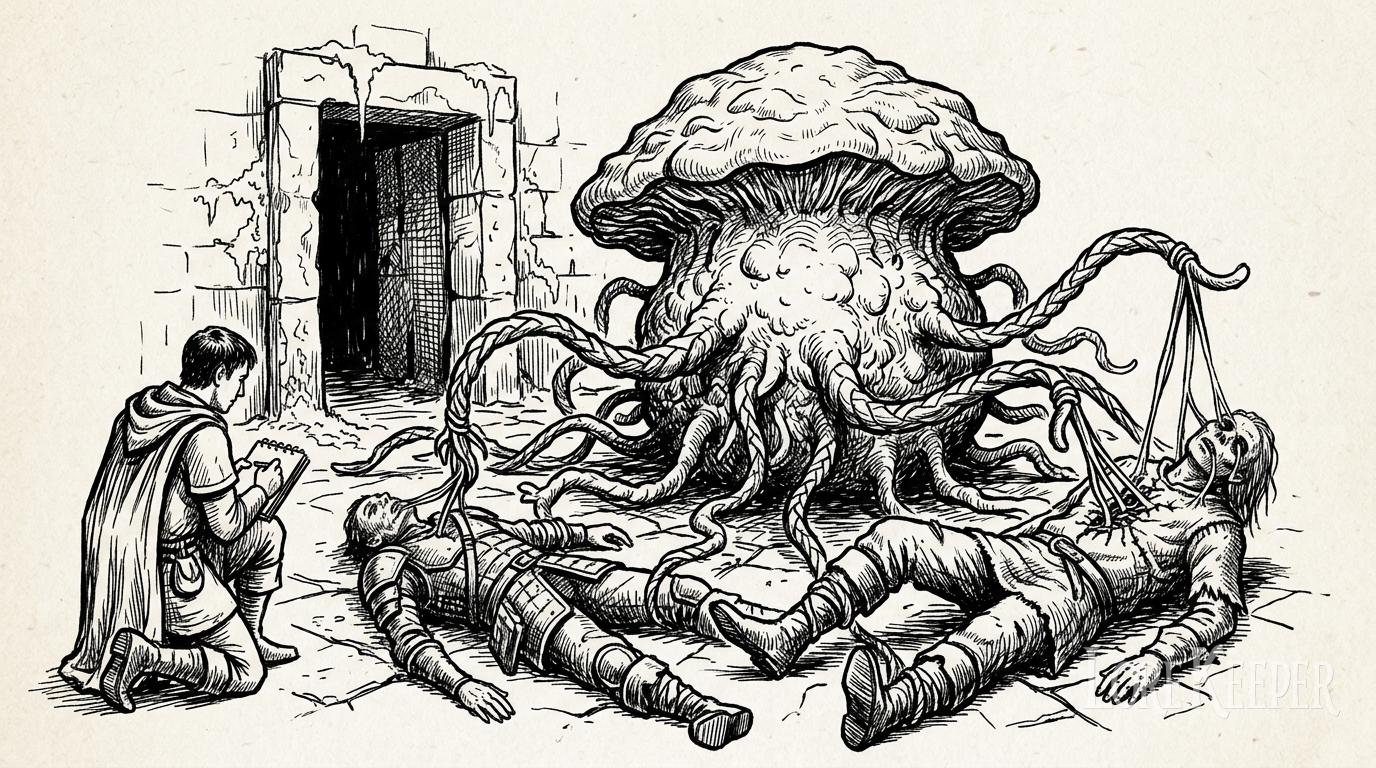
A ragged tangle of fungal tendrils and a central, bulbous cap, the Mycophylax is horrifying not for sheer size but for purpose: it seeks dead hands it can wear. When it finds a fallen adventurer it…
Thallok Puppeteer
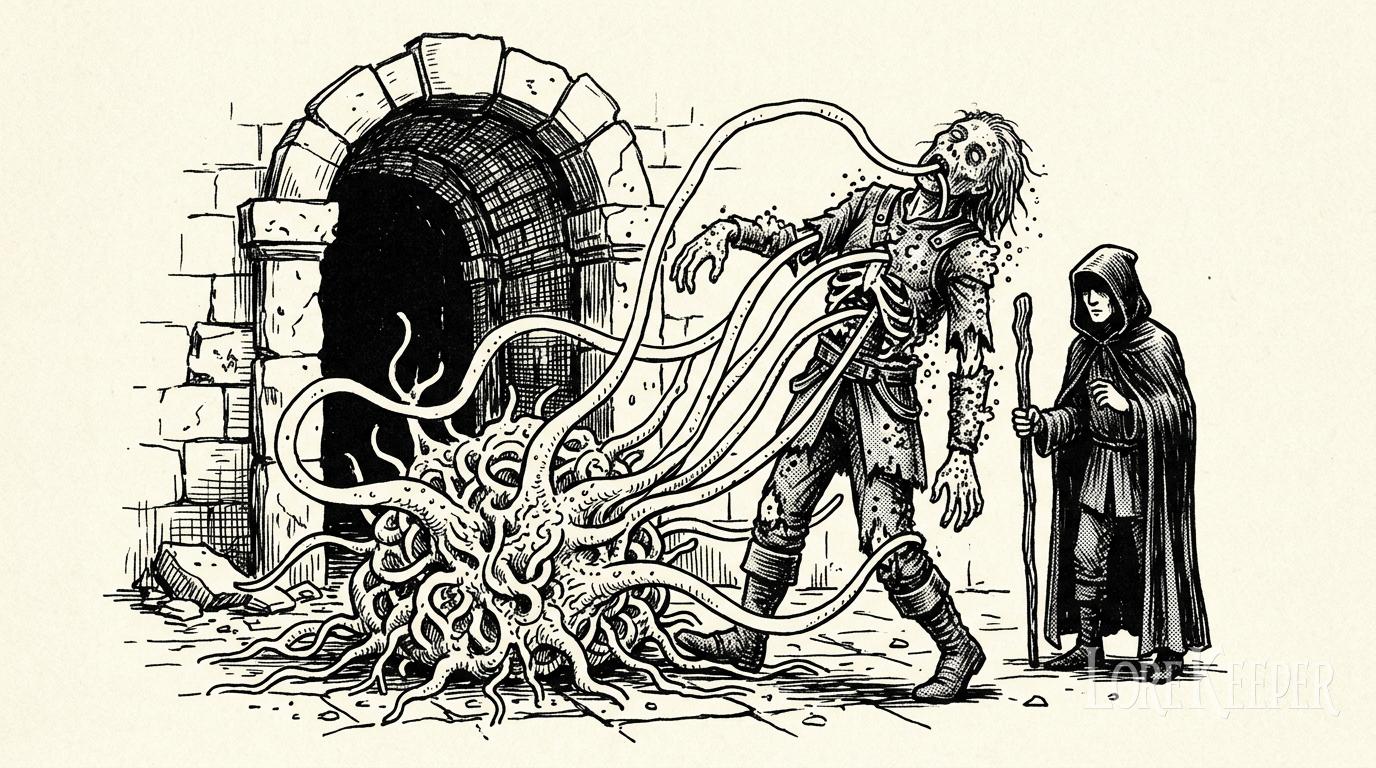
A Thallok Puppeteer looks like a bruise of blackened mycelium crowned with a tangle of pale, jointed tendrils that clutch with uncanny delicacy. It drags the corpses of fallen adventurers into its…
Ghrasket Rootmorne
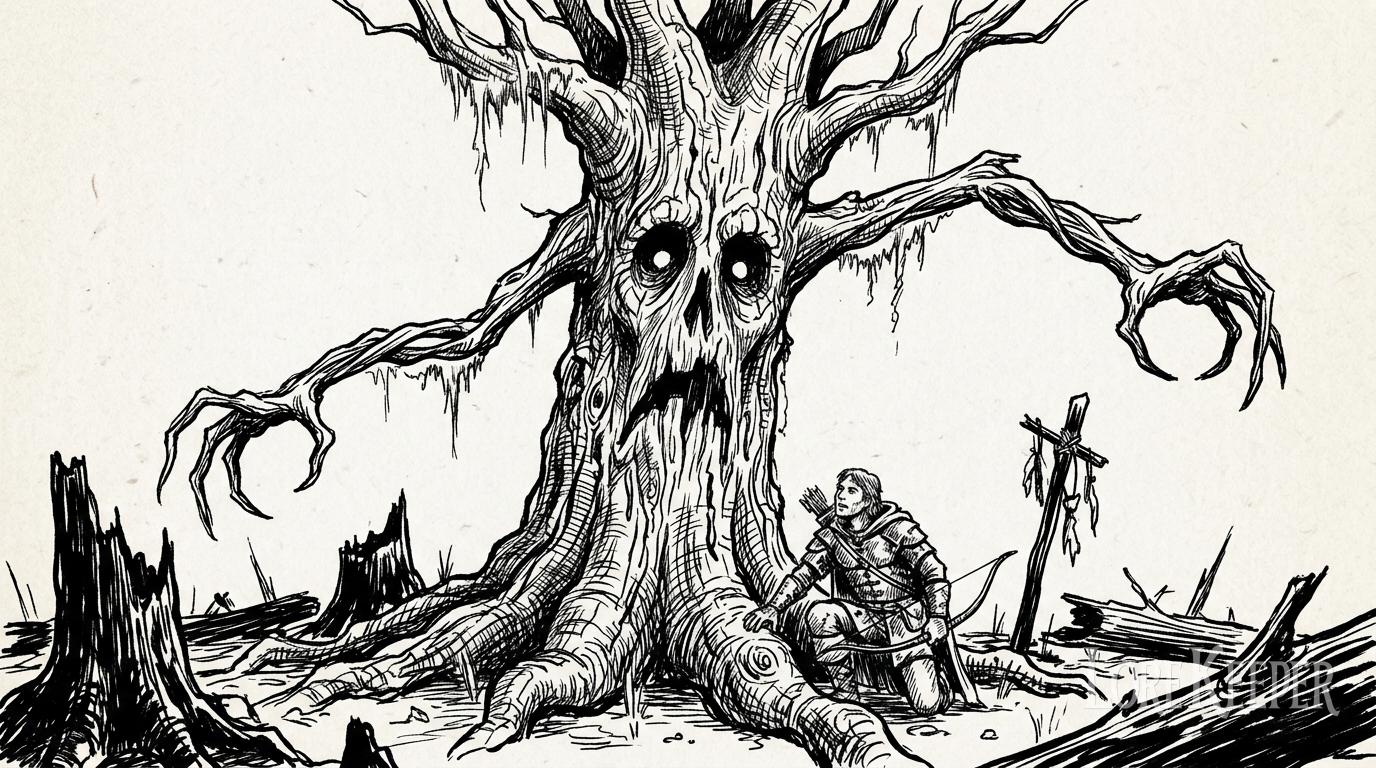
At first glance it is an ancient tree with knotted bark and sprawling limbs — until the bark peels back like a healed mouth and a face of warped wood howls. Ghrasket Rootmorne lurches with…
Gorvenash
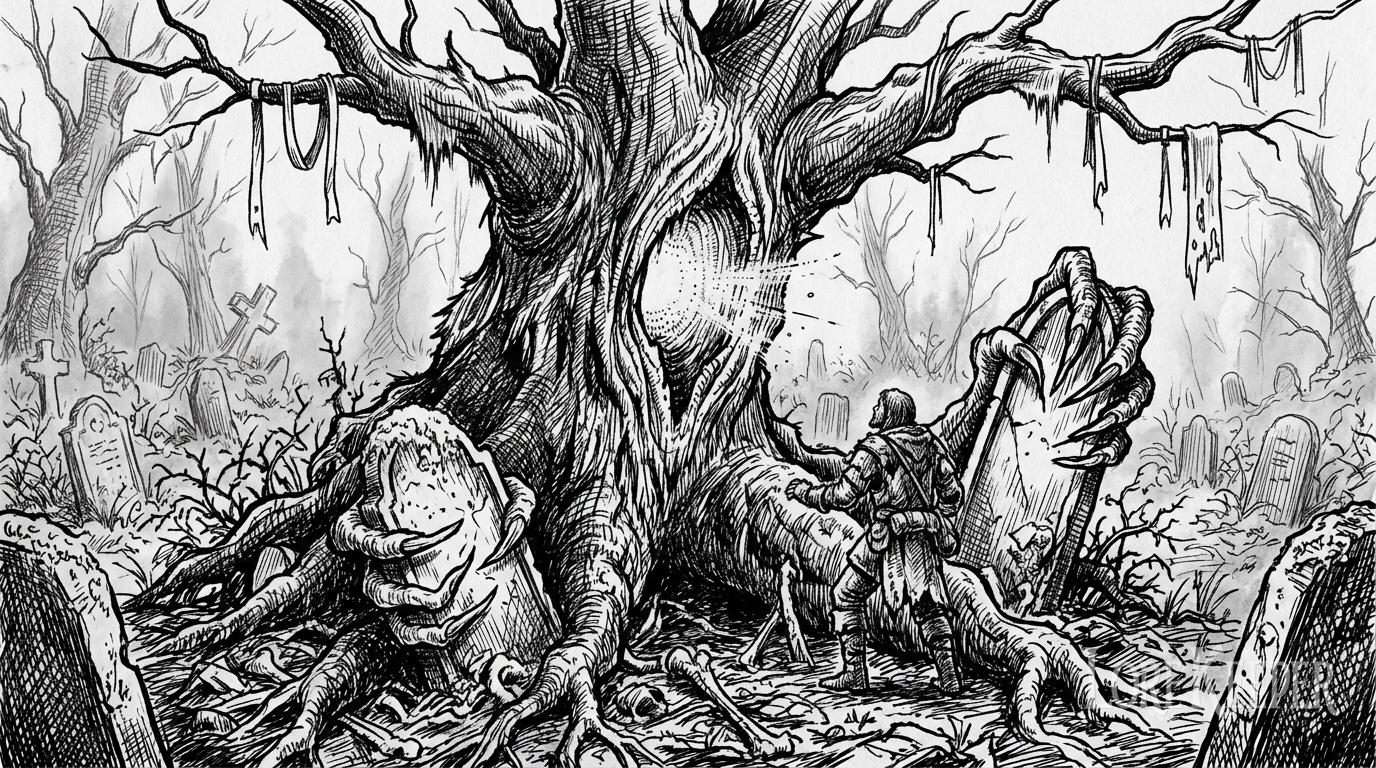
Gorvenash is a hulking, sorrow-gnarled sentinel of wood and rot: a once-ancient guardian tree twisted by a funerary curse into a grim warden that binds itself to tombstones. It moves with the…
Kirisylth
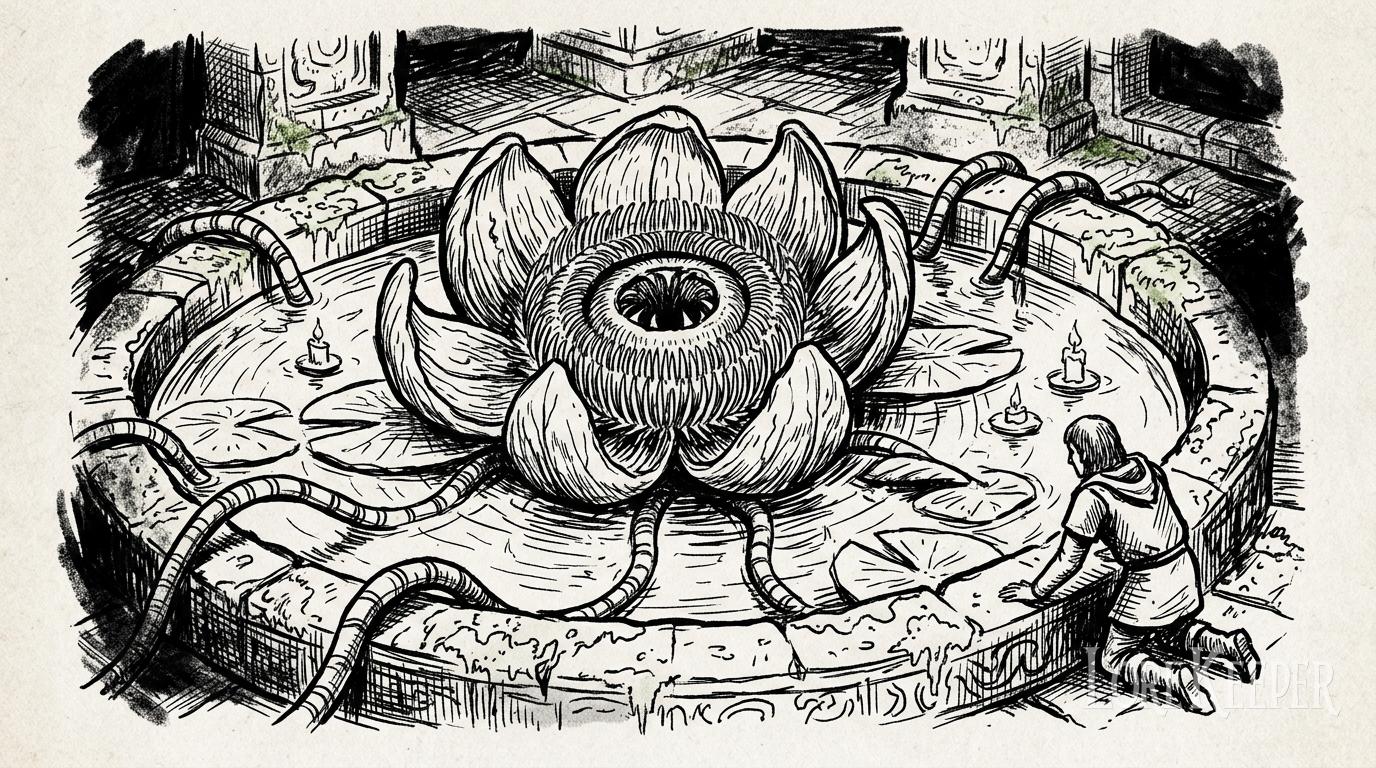
Kirisylth looks at first like an overgrown ceremonial lily floating in a temple pond, but when prey draws near its glossy petals peel back to reveal a ring of serrated, toothed filaments and a…
Morrowroot Sentinel
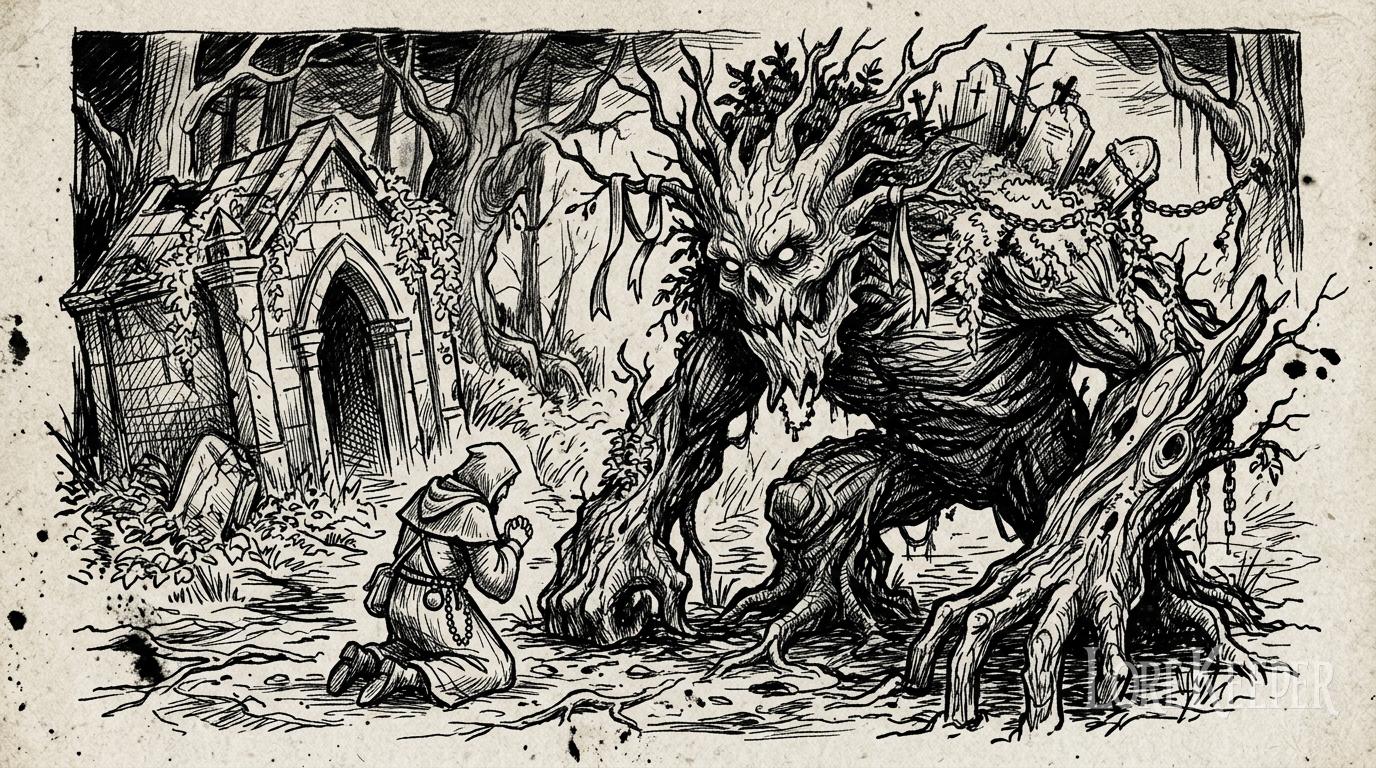
A contorted, walking holocaust of wood and old soil, the Morrowroot Sentinel is a treant twisted by centuries of burial rites and bitter necromancy. It moves with the slow inevitability of a falling…