Large
Beast
CR 7
Unaligned
Brahmor
Rampant Herdbreaker
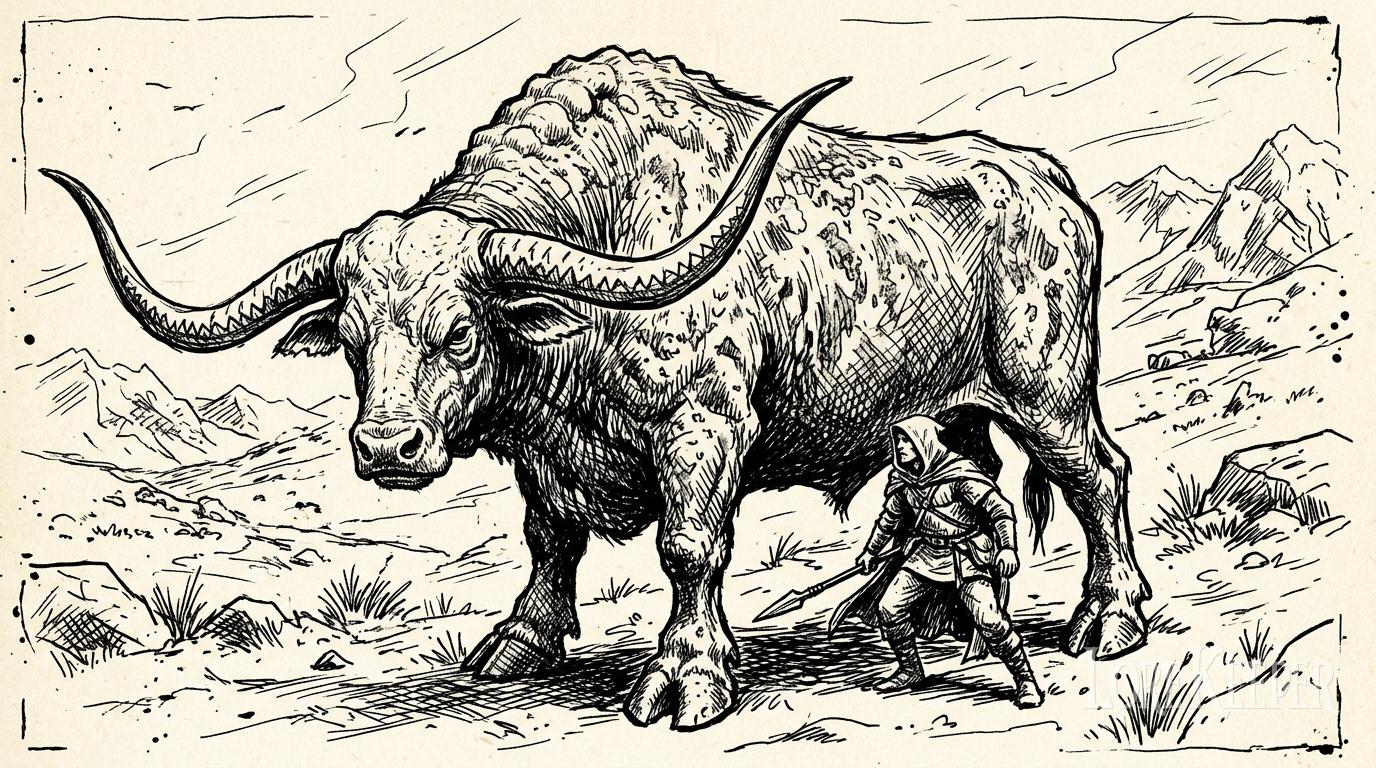
Imagine an impossibly massive bovine, wider than a warhorse and built like a granite boulder, charging with the single-minded fury of a landslide. The Brahmor is a wild mountain grazer that tramples underbrush into churned earth and sends whole hunting parties scattering with one thunderous run. Its low, vibrating moo carries for miles — a warning, a rallying cry for the herd, and a sound that makes even seasoned trackers instinctively take cover.
Armour
17
natural armor (thick hide and ridge)
Hit points
152
16d10+64
Speed
40ft
Challenge
7
2,900 XP
STR
20
+5
DEX
10
+0
CON
18
+4
INT
2
-4
WIS
12
+1
CHA
8
-1
Saving throws
STR +8
Skills
Perception +4
Senses
passive Perception 14
Languages
—
Multiattack. The Brahmor makes two attacks: one Horn and one Hoof.
Horn. Melee Weapon Attack: +8 to hit, reach 10 ft., one target. Hit: 18 (2d10+5) piercing damage. If the target is Large or smaller and the Brahmor moved at least 10 feet straight toward the target immediately before the attack, the target must succeed on a DC 16 Strength saving throw or be knocked prone.
Hoof. Melee Weapon Attack: +8 to hit, reach 5 ft., one target. Hit: 14 (2d8+5) bludgeoning damage. If the target is prone, the Brahmor deals an extra 7 (2d6) bludgeoning damage.
Stomp (Recharge 5–6). The Brahmor rears and then brings its full weight down in a crashing stomp. Each creature in a 15-foot-radius centered on the Brahmor must make a DC 16 Dexterity saving throw, taking 31 (7d8) bludgeoning damage on a failed save, or half as much on a success. On a failed save, a creature is also knocked prone.
Brahmor are native to high alpine plateaus and wind-battered basalt ridges where low vegetation and hardy lichens are the only stable food. They graze in compact herds led by an ancient bull called a 'keel' and dig terraces with repeated trampling that shape the plateau over generations. Tribes of shepherds in the region revere the Brahmor as both provider and destroyer, hunting them only in seasons of dire need and honoring their bones in cliffside cairns. Scholars like the field naturalist Merid Hosk of Greenthroat Lodge classify the Brahmor as a keystone species; where they pass, certain hardy grasses and lichen flourish, and the churned earth collects rain, forming seasonal pools. Warbands have learned that confrontation with a Brahmor herd is never about single combat — the herd's protective formations and thundering charge are its weapons. The Keepers of the Granite Step, a mountain-dwelling order, maintain old bell-towers to mimic Brahmor calls and steer herds away from settlements when snow threatens crops.
A Brahmor stands roughly as tall as a tall human at the shoulder but is massively broad from hip to flank. Its skull is heavy and domed, with thick, ridged horns that sweep outwards and then curve back like cleavers; the horns are grooved with weather lines and embedded grit. The hide is coarse, corded with bristly hair and mottled with pale lichen-like patches; the skin around its shoulders and neck forms a knuckled, armor-like ridge. A short, powerful tail ends in a tuft of bristles. Hooves are broad and cracked, splayed for traction on scree. Scars, old chip-marks, and moss fill the crevices of its hide, and younger bulls bear flaps of torn ear or horn from past fights. Size cues: in art, place a crouching human ranger at the Brahmor's flank to show its bulk and show wind-swept plateau stones and low tussock grass underfoot.
Made with the free LoreKeeper D&D Monster Generator · D&D 5e-compatible stat block · Free to use at your table · Licence
More Beasts
Skraeth
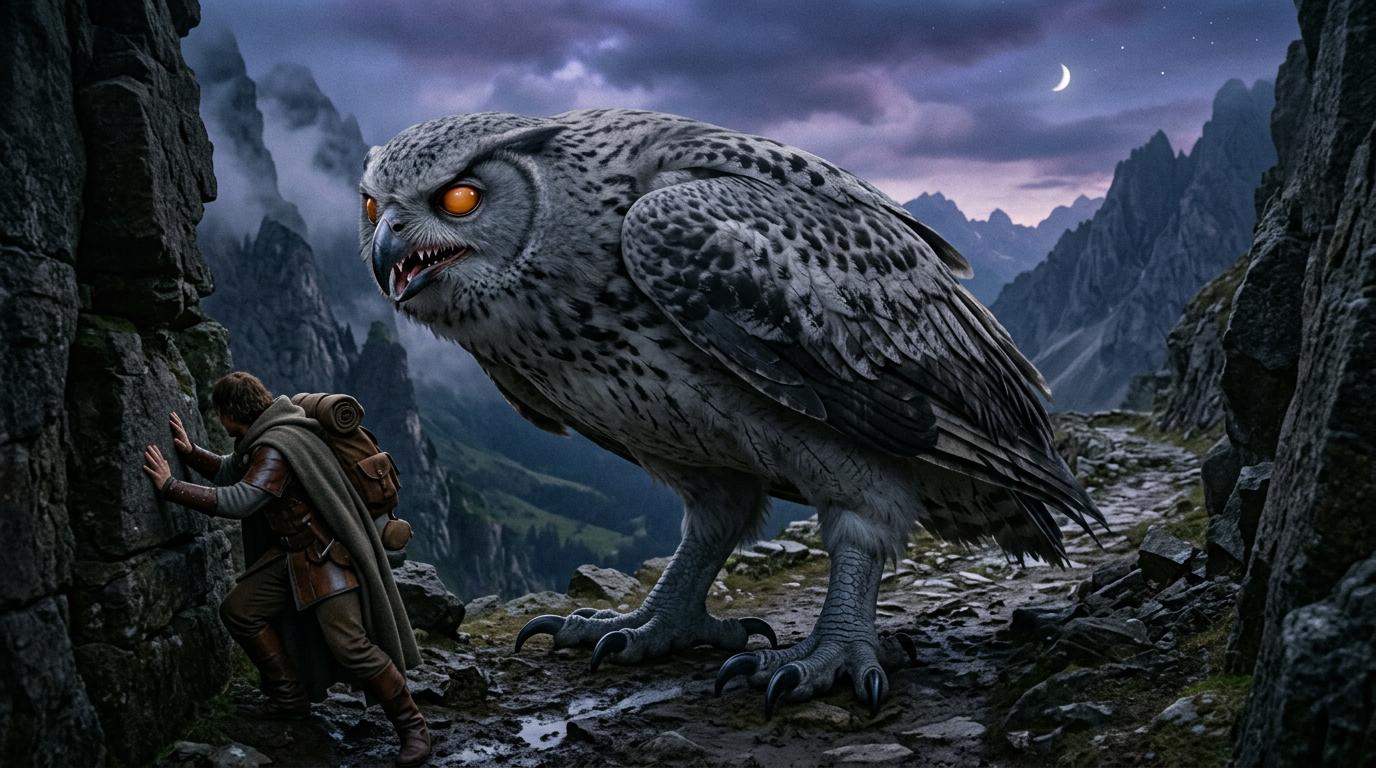
A Skraeth is a hulking, flightless owl the size of a warhorse, its ash-gray plumage stippled with darker speckles and its trailing wing feathers forming ragged, speckled fringes. It moves with a…
Ferrugivore
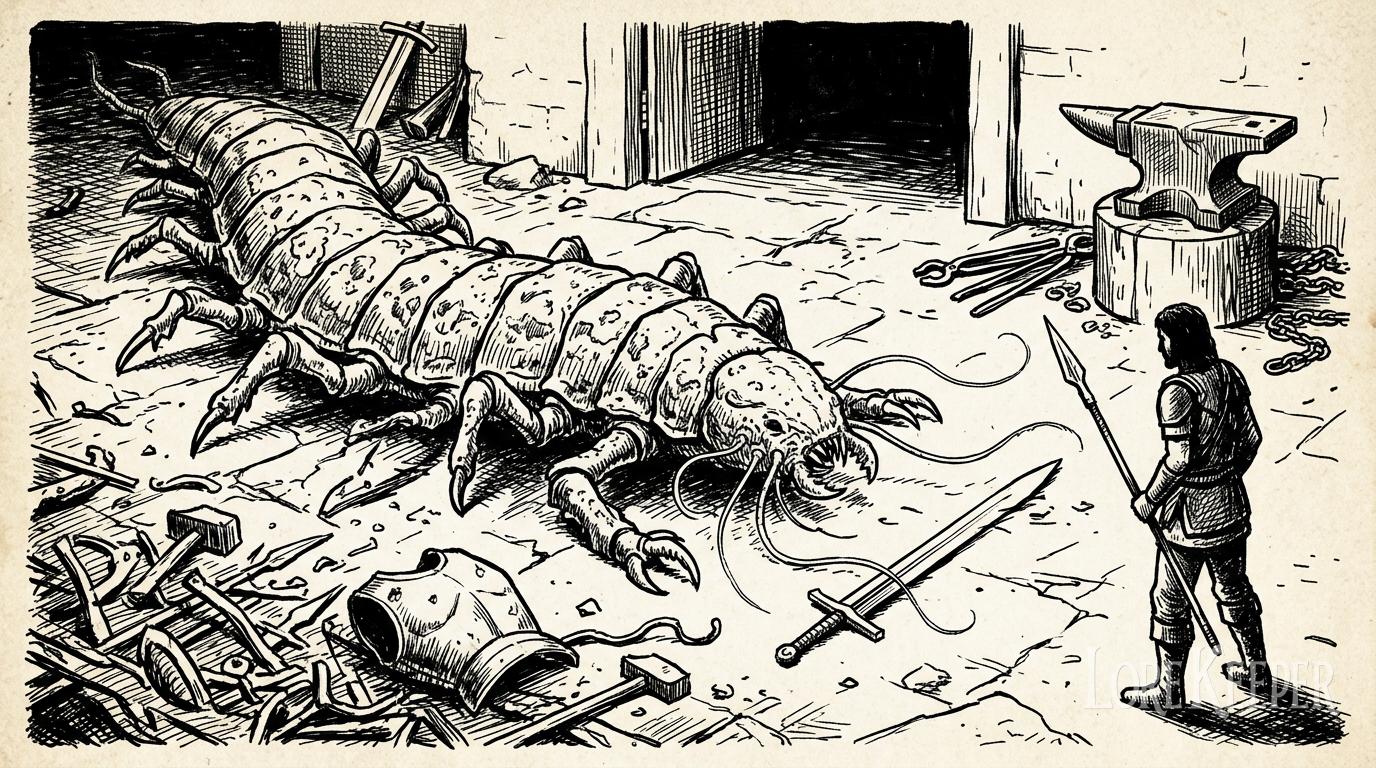
The Ferrugivore is a grotesque, centipede-like vermin that hungers for the hum of enchantment. It glides over armor and weapons with uncanny purpose, its segmented carapace exuding a whine like…
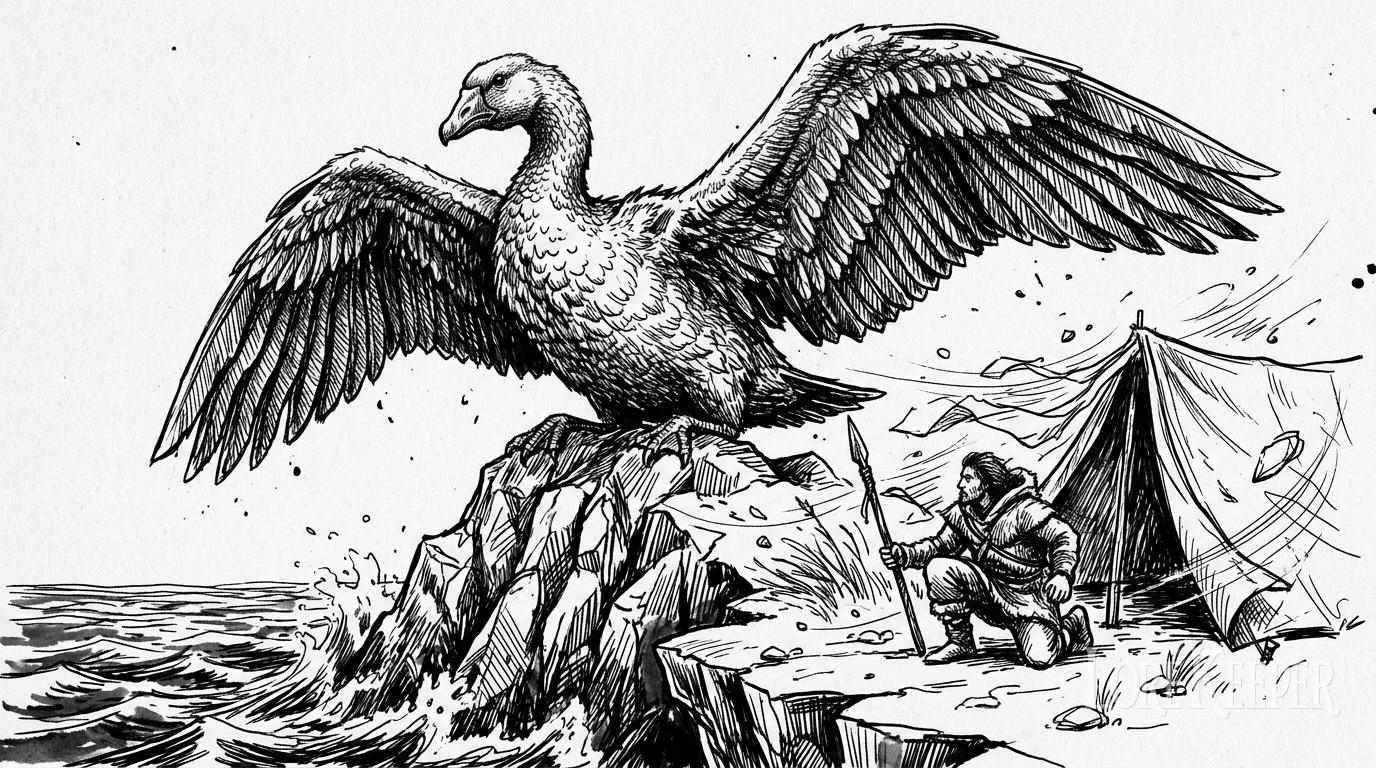
Quorlin
At a distance the Quorlin looks like an overlarge, immaculate goose riding the wind; up close it becomes terrifying — each beat of its enormous wings rearranges gusts as if it were carving the sky…
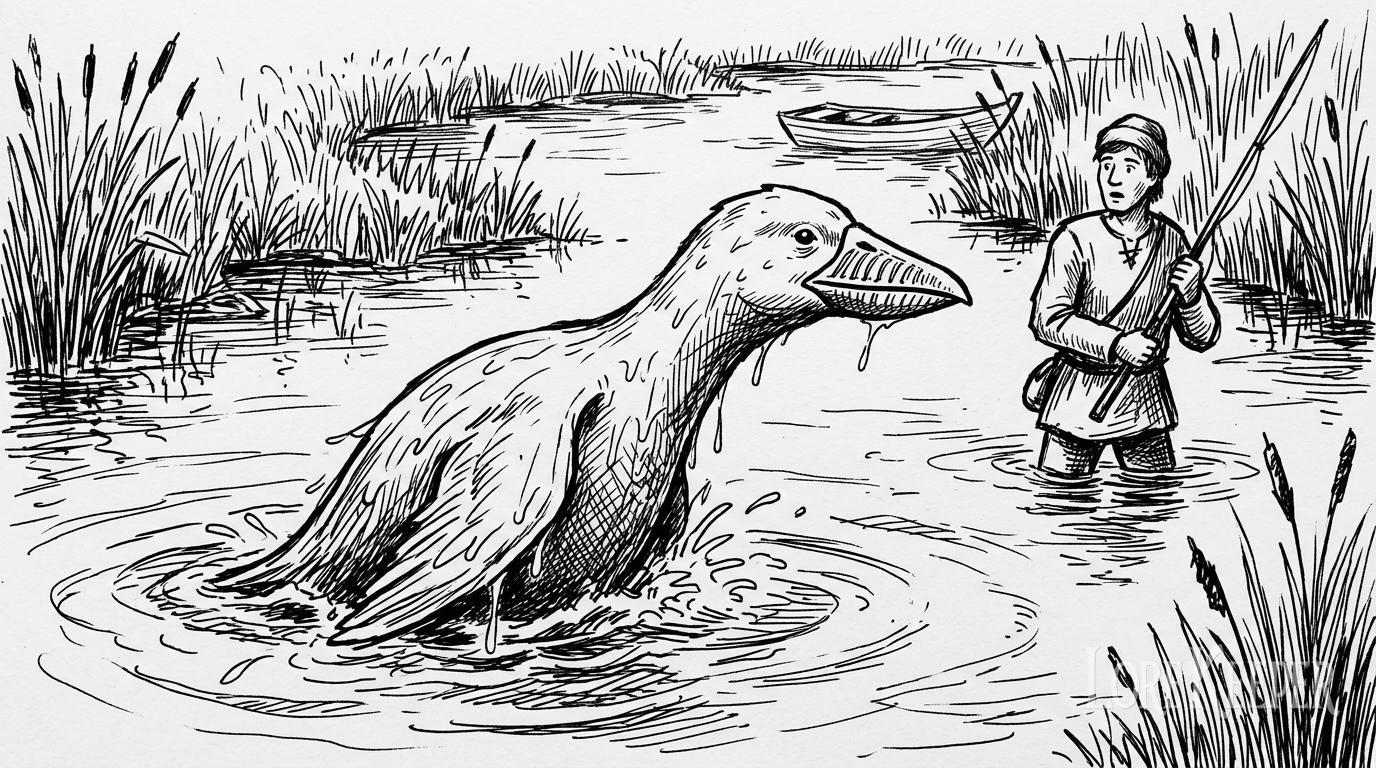
Brinegander
A Brinegander looks like an overgrown, streamlined goose born of tidal currents: its neck is whip-thin and its body flattened like a racing skiff. In the water it becomes a living bullet, jetting…
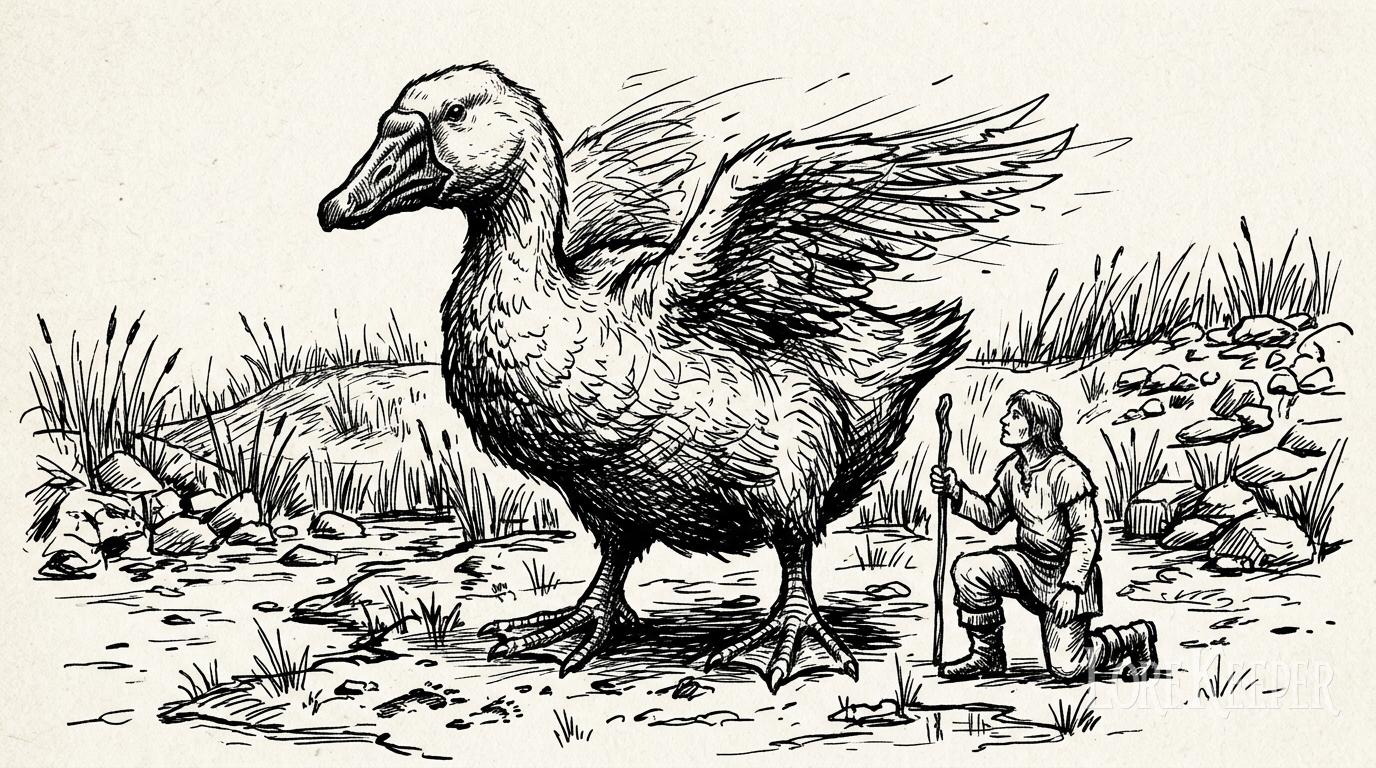
Gavress
The Gavress is a squat, heavily muscled goose the size of a warhorse, moving with surprising speed across marsh and meadow. It uses enormous wings more like battering rams than for flight, charging…
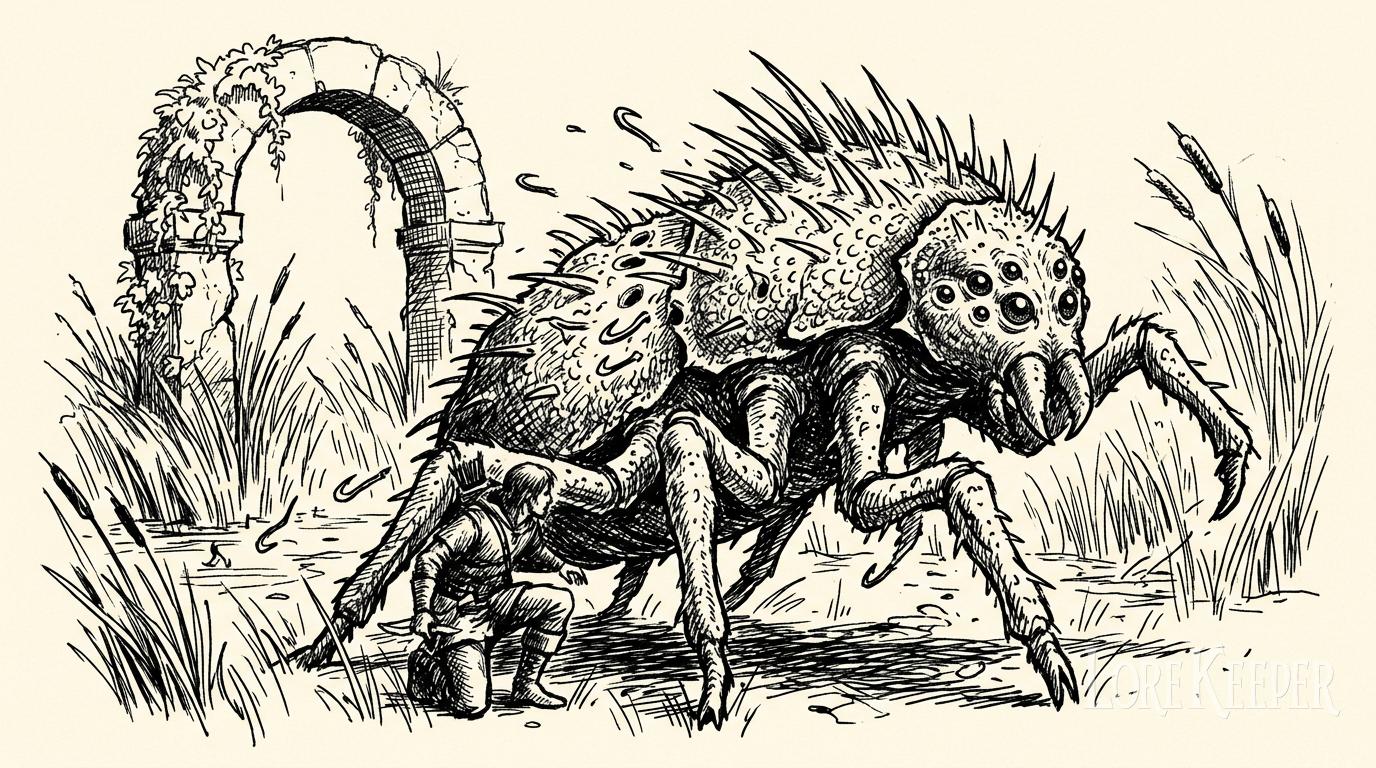
Thrennix
A low, skittering silhouette that appears the size of a warhound but impossibly angular, the Thrennix is memorable for the way its many eyes glitter like pinpricks of cold light and its body…