Large
Plant
CR 5
Neutral Evil
Harrowroot
Cursed Gravewarden
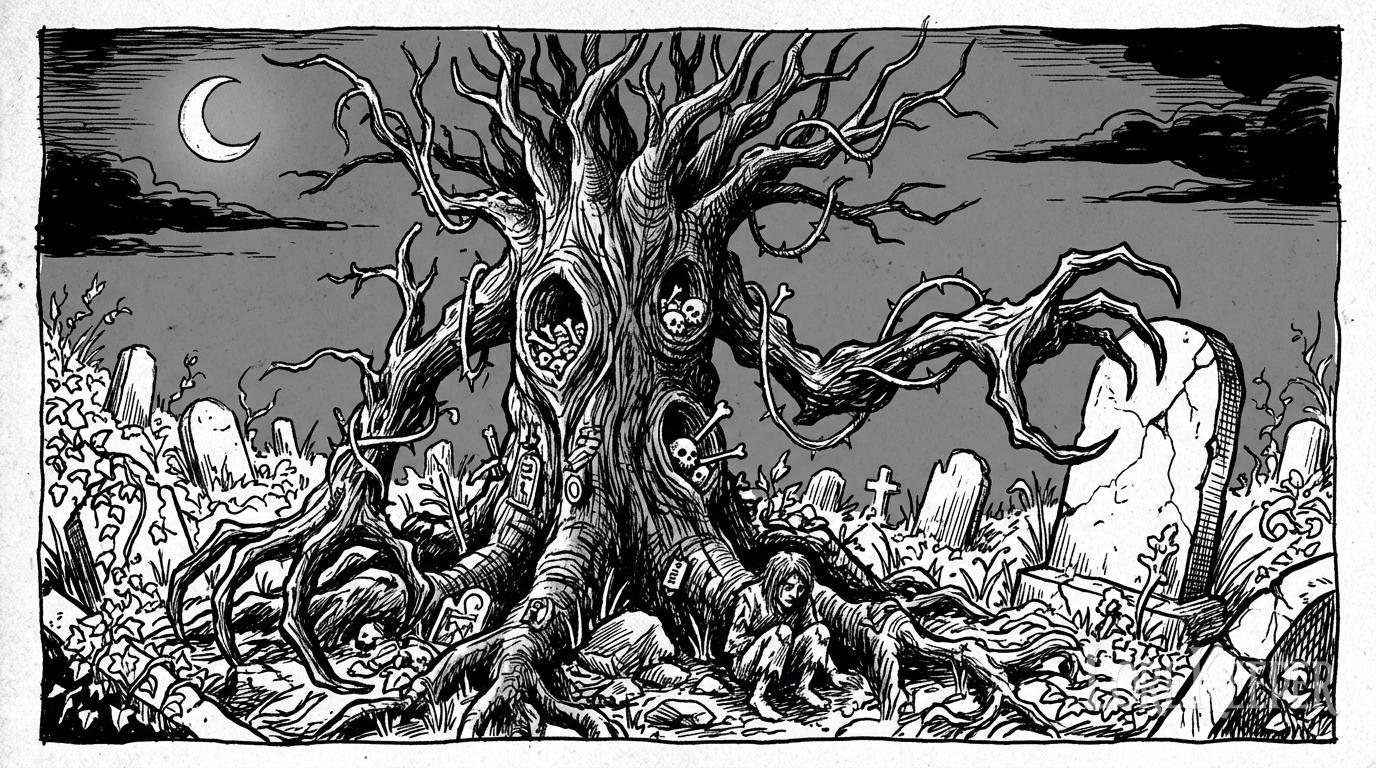
What was once an ancient guardian of the grove has become a walking mausoleum: limbs like rotted pillars, knots that hide weeping hollows, and a crown of dead branches that drip soil. The Harrowroot lingers where the earth remembers blood and names, its roots tangled with graves; it whispers the names of the buried and answers with roots that clamp like iron. It is not merely territorial—this treant is the physical memory of a forgotten cemetery, guarding bones and curses with a patient, implacable malice that makes every moonlit visit feel like intrusion into a living tomb.
Armour
15
natural armor
Hit points
119
14d10+42
Speed
30ft
Challenge
5
1,800 XP
STR
17
+3
DEX
8
-1
CON
16
+3
INT
10
+0
WIS
14
+2
CHA
12
+1
Saving throws
STR +6, WIS +5
Skills
Perception +5, Stealth +1
Resistances
bludgeoning, piercing, and slashing from nonmagical attacks
Damage immunities
poison
Condition immunities
charmed, poisoned
Senses
darkvision 60 ft., passive Perception 15
Languages
Sylvan, understands Common but speaks in creaks and names
Multiattack. The Harrowroot makes two Slam attacks.
Slam. Melee Weapon Attack: +6 to hit, reach 10 ft., one target. Hit: 12 (2d8+3) bludgeoning damage, and the target must succeed on a DC 13 Strength saving throw or be knocked prone.
Gravebind (Recharge 5-6). The Harrowroot slams the ground. Each creature in a 20-foot radius centered on the Harrowroot must make a DC 13 Strength saving throw. On a failed save, a target takes 21 (6d6) necrotic damage and becomes restrained as thick roots and funerary weeds entwine it. On a successful save, a target takes half damage and is not restrained. A restrained creature can use an action to make a Strength check against the Harrowroot's DC; on success it breaks free. The bound vegetation withers and cannot be used again until the Harrowroot finishes a short or long rest.
Protecting Burl. When a creature the Harrowroot can see within 10 feet is hit by an attack, the Harrowroot can interpose a burl of bark, granting that creature resistance to the triggering attack's damage. Once used, this reaction can't be used again until the Harrowroot finishes a short rest.
Harrowroots are the result of a ruinous pact made centuries ago when a small hamlet sought protection for its burial ground from marauding spirits. A druidic order called the Wardenhand bound a grove spirit to soil soaked with funerary rites, fusing it with the cemetery's oldest yews. Over generations the spirit absorbed grief, bitterness, and the residue of unquiet deaths; the binding corrupted the guardian into something possessive and hungry for remembrance. When the hamlet fell and the Wardenhand disbanded, Harrowroot remained, tethered to the graves whose names it refuses to let go. Harrowroots lair in overgrown graveyards, churchyards long reclaimed by moss, or burial mounds forgotten by cartographers. They feed less on flesh than on stories: offerings left, mourning whispered at dusk, or the rusty relics interred with the dead. Local sextons and scholars—such as the antiquarian Heleth Mirr of Garsel Mire—keep a wary record of them. Folktales say that if you can recite a buried person's true name while lighting a white candle at their marker, the Harrowroot will accept the offering and release a fragment of the grave's sorrow; refuse, and the treant takes offense, binding interlopers in creeping roots until dawn.
A towering tree-bodied figure standing roughly twice the height of a human (12–14 feet), its bark is pocked with open, cavernous knots that ooze humus and faintly luminescent lichen. Limbs are thick, bowed, and split, revealing dark chambers lined with dried moss and bone dust. Where a treant's face would be, there is a shroud of twisted roots that suggest hollowed sockets and a jaw of fused rootlets. Long, finger-like branches end in barbed tendrils that resemble blackened nails. Along its trunk, old funerary trinkets—rusted lockets, copper rings, and frayed gravecloth—are embedded like barnacles. The whole creature has a sagging, fibrous texture; when it moves, loose soil cascades from seams and tiny flowers of pale white bloom from wounds in its bark, giving off the faint scent of old earth.
Made with the free LoreKeeper D&D Monster Generator · D&D 5e-compatible stat block · Free to use at your table · Licence
More Plants
Gorvenash
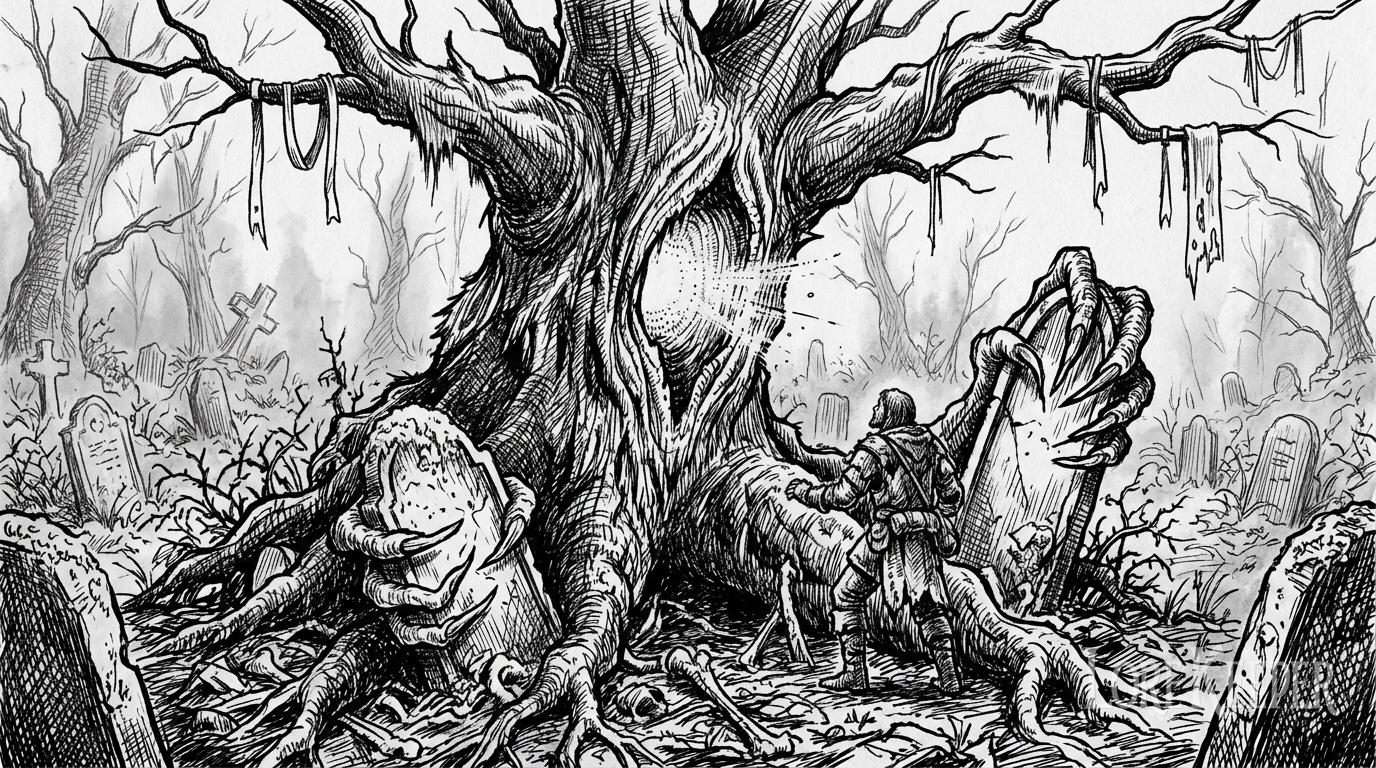
Gorvenash is a hulking, sorrow-gnarled sentinel of wood and rot: a once-ancient guardian tree twisted by a funerary curse into a grim warden that binds itself to tombstones. It moves with the…
Thallok Puppeteer
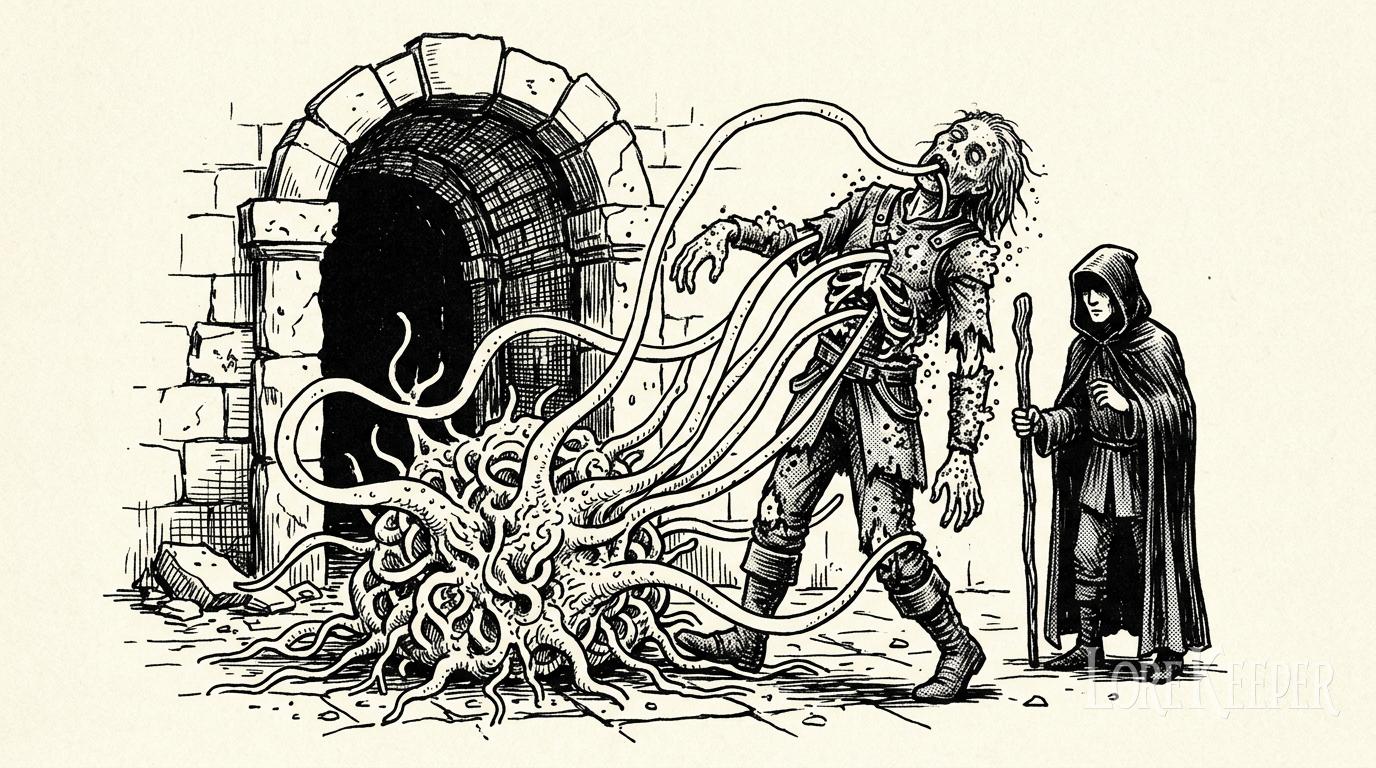
A Thallok Puppeteer looks like a bruise of blackened mycelium crowned with a tangle of pale, jointed tendrils that clutch with uncanny delicacy. It drags the corpses of fallen adventurers into its…
Ghrasket Rootmorne
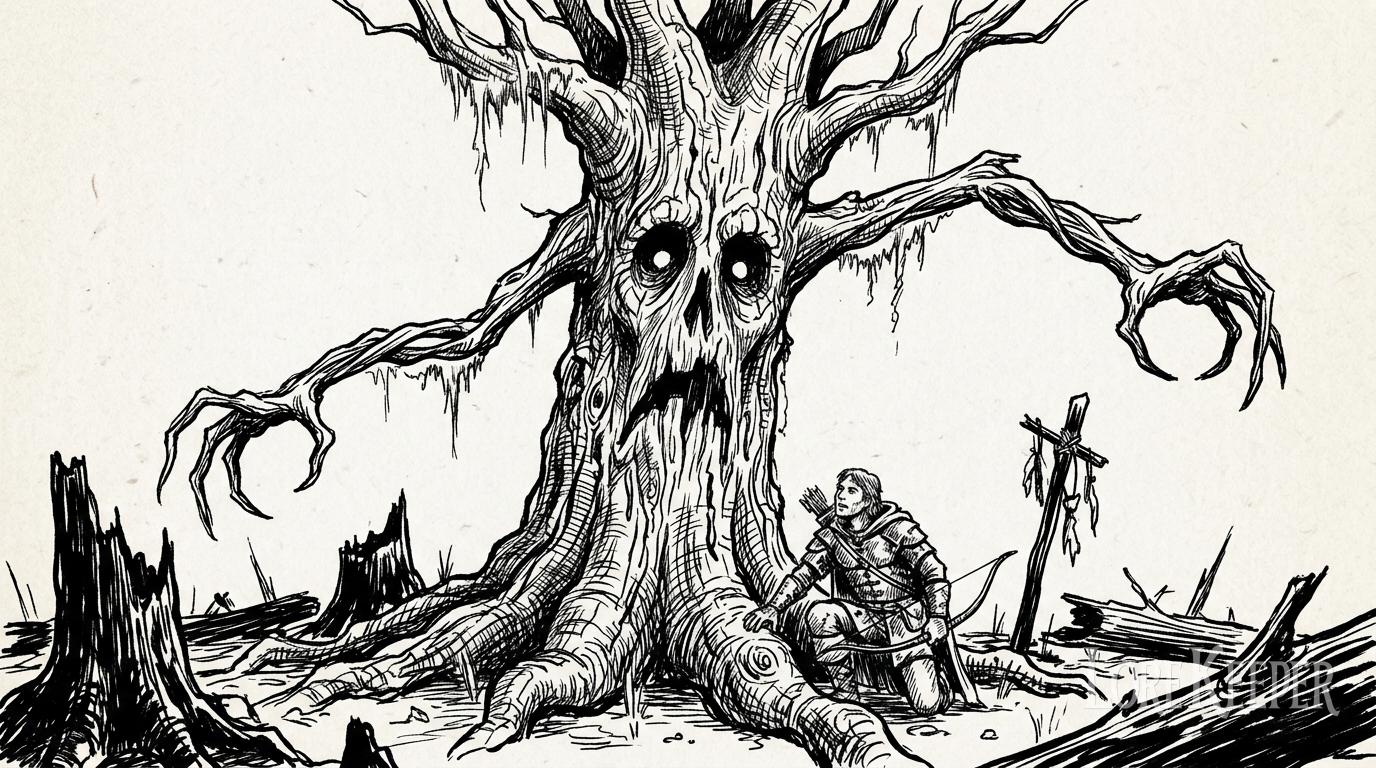
At first glance it is an ancient tree with knotted bark and sprawling limbs — until the bark peels back like a healed mouth and a face of warped wood howls. Ghrasket Rootmorne lurches with…
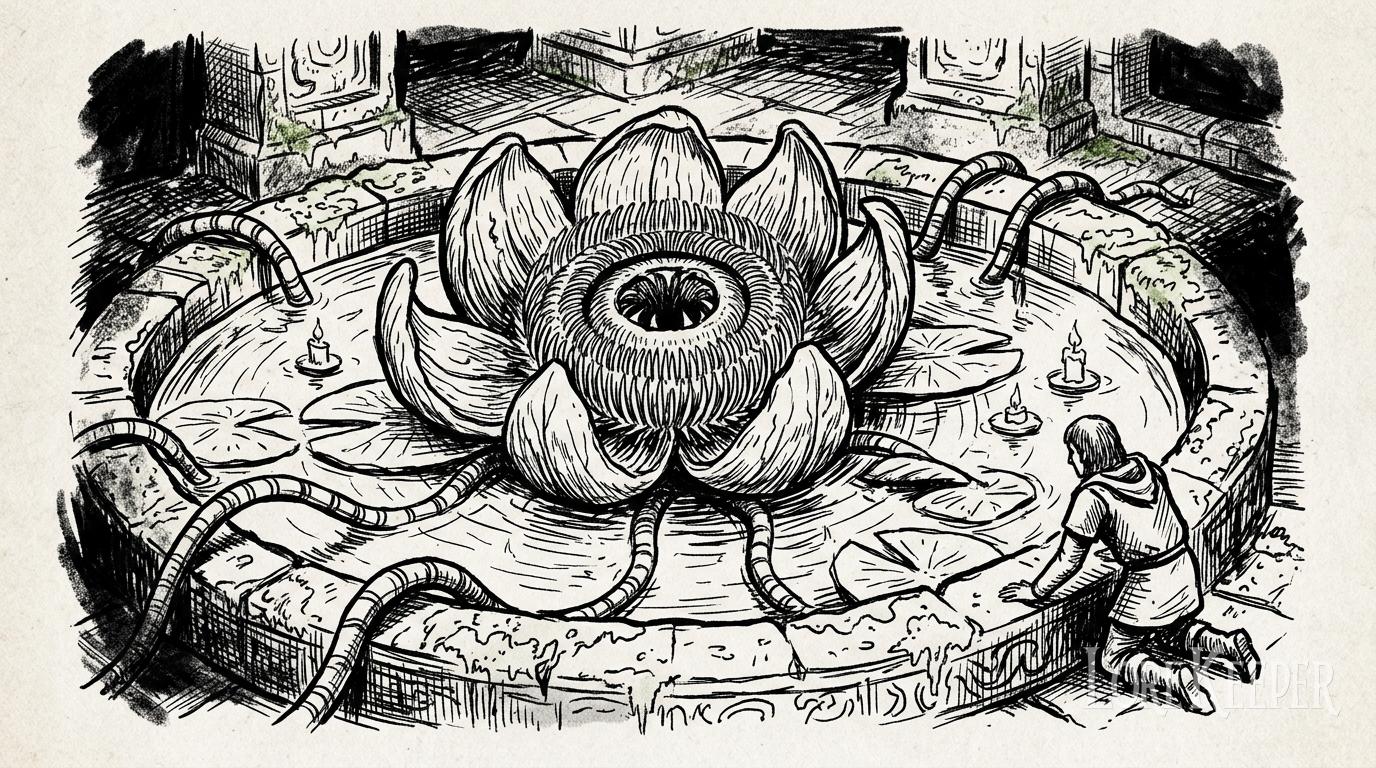
Kirisylth
Kirisylth looks at first like an overgrown ceremonial lily floating in a temple pond, but when prey draws near its glossy petals peel back to reveal a ring of serrated, toothed filaments and a…
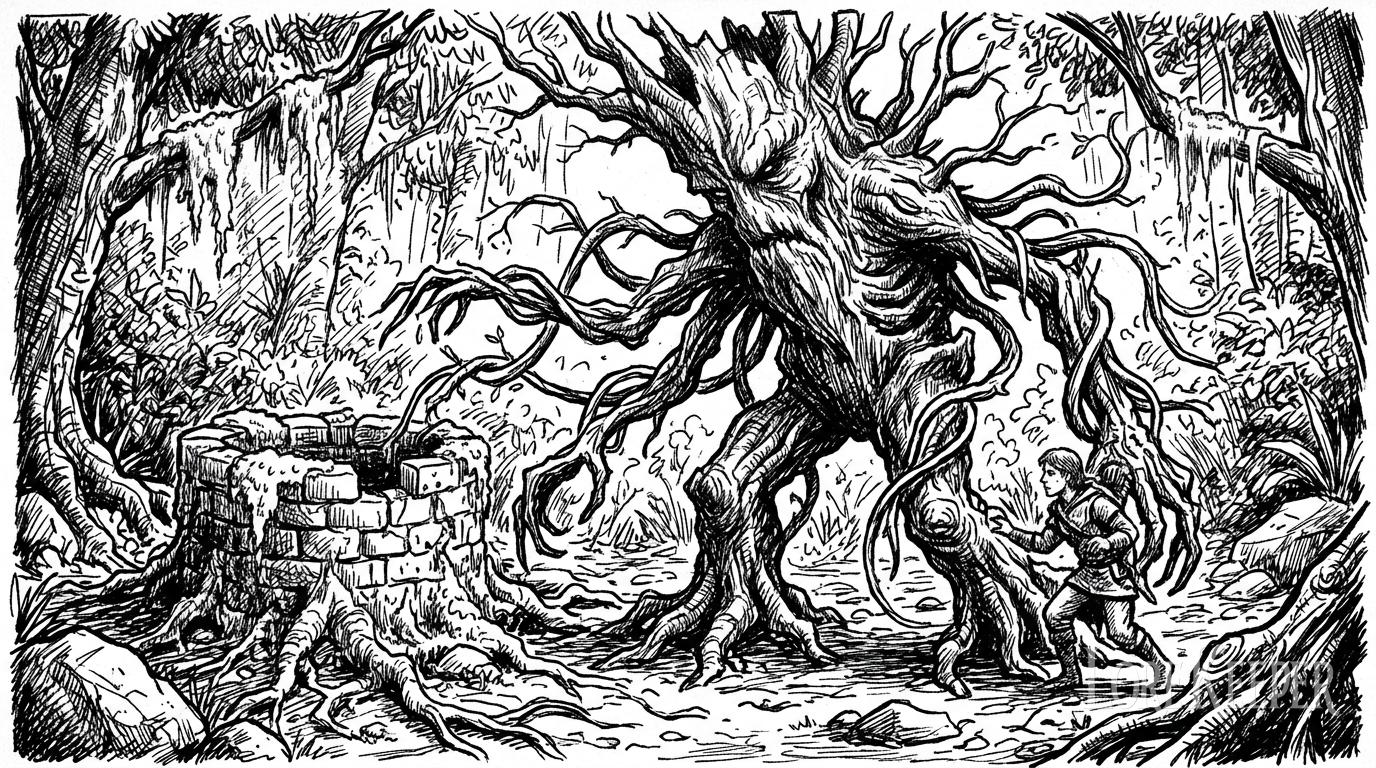
Verdraugh
The Verdraugh is a hulking, ambulatory knot of bark, roots and hungry green light that moves like a slow, inexorable predator through sunlit understories. It surrounds prey with writhing vine-arms…
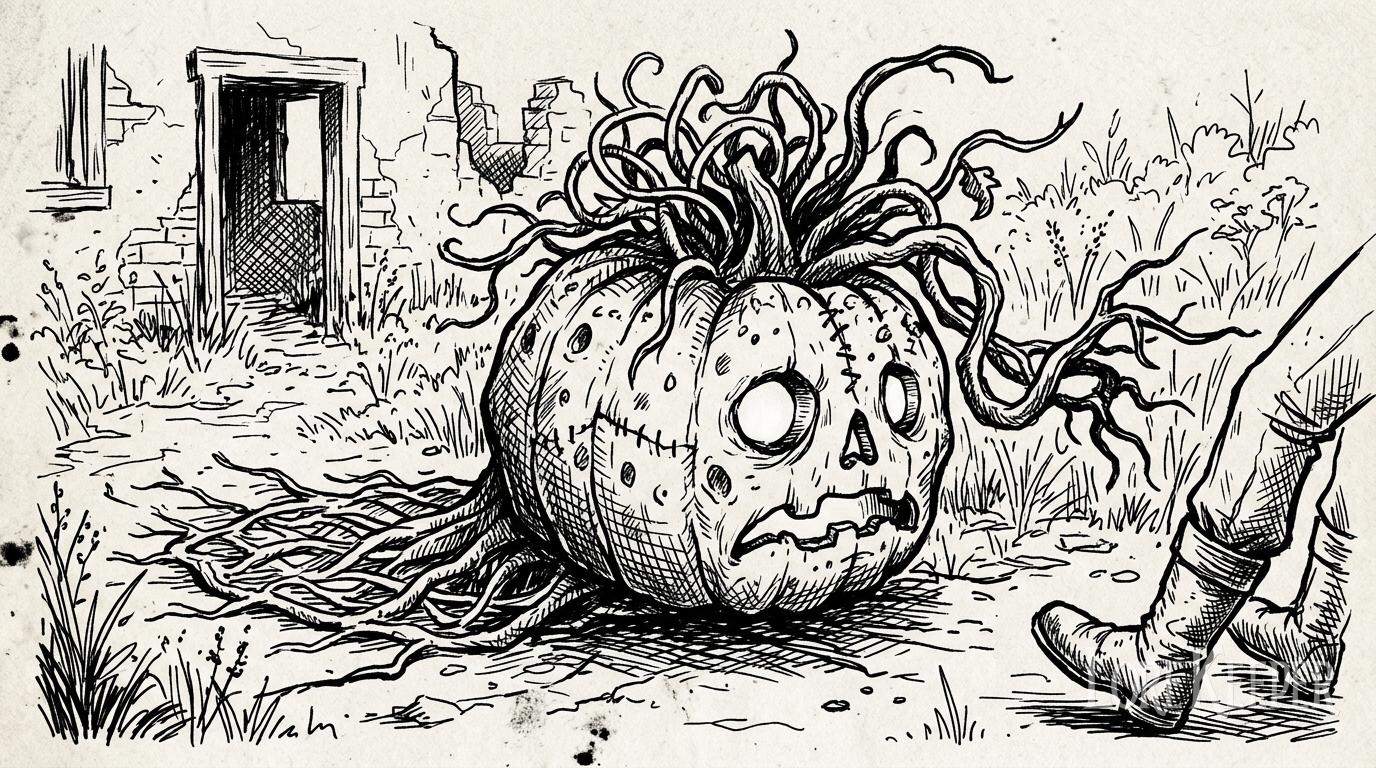
Serehusk
Serehusk is a waddling, sentient pumpkin whose rind is stitched with angry seams and whose crown spills a writhing mass of eager vines. It doesn't roar so much as creak and whisper as tendrils probe…