Large
Construct
CR 7
neutral
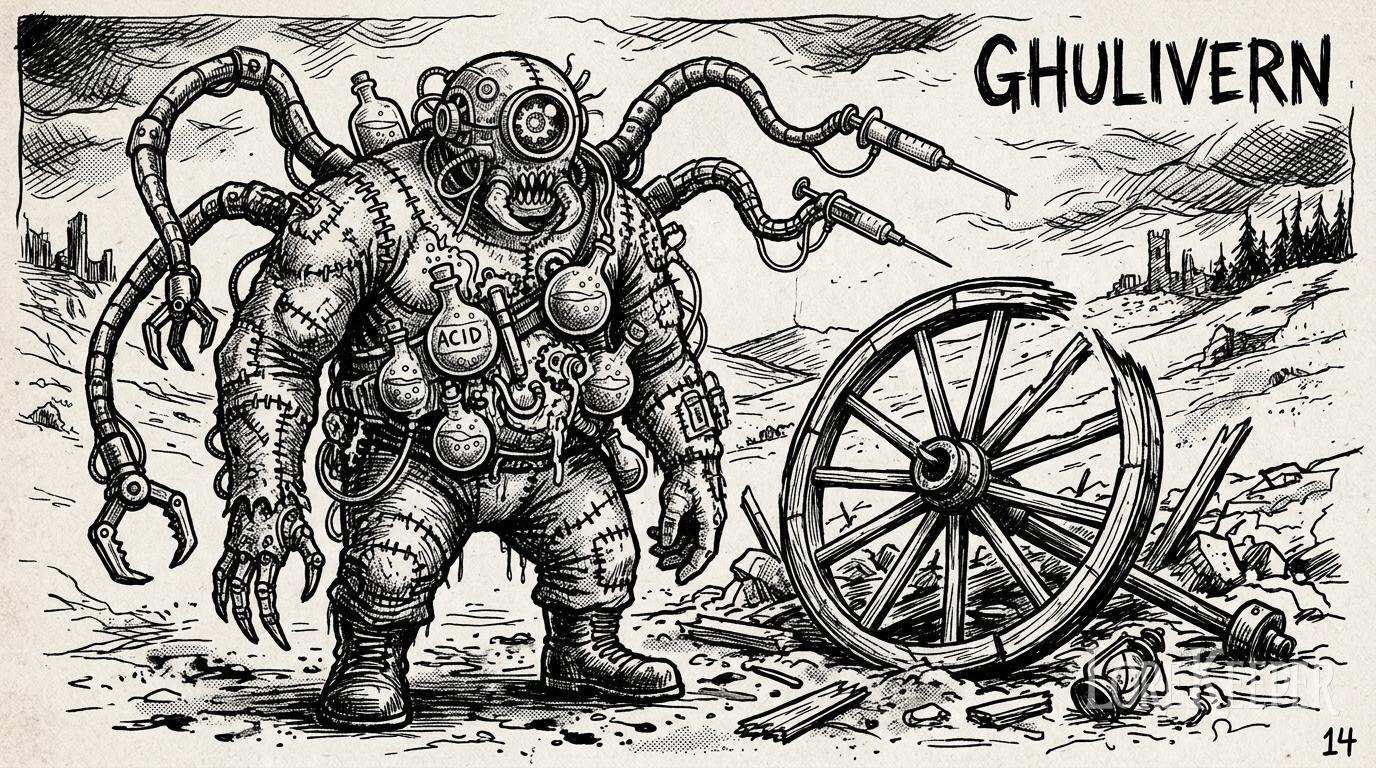
Ghulivern
Wandering Bioreactor
A hulking, stitched-together homunculus that walks like a slow, deliberate machine, the Ghulivern is terrifying because its body is a factory of living weapons: sac-like organs pump acid, spore-mills hiss noxious clouds, and lancet-tentacles flick outward with surgical precision. It wanders trade roads and ruined laboratories, sometimes trailing a stench of copper and rot; when it attacks it rarely tries to kill quickly — it tests, ruptures, and contaminates, turning a single bite or spit into a spreading hazard that forces careful planning or painful retreat.
Armour
16
natural armor (rigid carapace and stitched hide)
Hit points
128
15d10+45
Speed
30ft
Challenge
7
2,900 XP
STR
16
+3
DEX
16
+3
CON
16
+3
INT
12
+1
WIS
12
+1
CHA
10
+0
Saving throws
DEX +6, CON +6
Skills
Stealth +6, Perception +4
Damage immunities
poison
Condition immunities
poisoned, exhaustion
Senses
darkvision 60 ft., passive Perception 14
Languages
understands Common but can't speak
Multiattack. The Ghulivern makes two attacks: one Claw attack and one ranged Spit Acid attack.
Claw. Melee Weapon Attack: +6 to hit, reach 10 ft., one target. Hit: 10 (2d6+3) slashing damage.
Spit Acid. Ranged Weapon Attack: +6 to hit, range 30/120 ft., one target. Hit: 16 (4d4+3) acid damage, and the target must succeed on a DC 14 Constitution saving throw or suffer persistent acid burns that deal 7 (2d6) acid damage at the start of each of its turns. A creature can repeat the saving throw at the end of each of its turns, ending the effect on itself on a success. (DC 14 = 8 + proficiency + CON modifier)
Bioreactor Overload (Recharge 5-6). The Ghulivern lashes its saclike organs, rupturing them in a spray. Each creature in a 15-foot radius must make a DC 14 Dexterity saving throw, taking 21 (6d6) acid damage on a failed save, or half as much on a successful one. On a failed save, a creature's armor or clothing corrodes, imposing disadvantage on attack rolls and Dexterity saving throws until repaired (a successful DC 15 Wisdom (Medicine) check or magical repair ends the impairment).
Ejecta Burst. When a creature the Ghulivern can see within 10 feet hits it with a melee attack, the Ghulivern can immediately spit an irritating cloud at that attacker: the attacker must succeed on a DC 14 Constitution saving throw or be blinded until the end of its next turn. Once the Ghulivern uses this reaction, it can't use it again until the end of its next turn.
Ghuliverns are not born so much as constructed: itinerant biomancers and outcast apothecaries stitched the first from the remnants of experimental homunculi, grafted organs, and odd animal anatomies. Legends attribute the earliest models to the exiled cabal known as the Blackstitch Consortium, who used them to sabotage rival alchemists and to harvest reagents from the living. Over time, some Ghuliverns slipped free of their makers and developed a slow, pragmatic sentience. They wander in search of raw components and curious energies, driven by a compulsion to refine their internal mechanisms. These creatures favor ruined laboratories, marshy roadside gutters, and the damp lower streets beneath merchant quarters. They feed on refuse, small carrion, and the alchemical residue left in middens. Scholars at the Collegium of Broken Mechanisms — notably Professor Merek Dallin, who wrote The Hollow Alchemist — note that Ghuliverns sometimes follow caravan routes, attracted to the steady stream of waste and the strange scents of travel. Villagers tell darker tales: a Ghulivern will mark a site where something living was split open, and in weeks a ring of scorched or acid-melted earth will bloom with odd fungi and hungry insects.
A Ghulivern stands as tall as a broad doorway (about 9–10 feet standing) and is a patchwork of pale leathered skin, oiled brass plates, and translucent membrane. Its torso bulges with visible sacs and fluted chimneys — some pulsate with greenish acid, others glow faintly and exude spores. Four jointed tentacles sprout where its arms should be; two end in rough, clawed hands and two in narrower, needle-like proboscises. A rounded, lens-covered head sits on a short neck, the lens like a watch-glass that can dilate to expose a cluster of tiny feeding mandibles. Veins of copper tubing snake along its ribs, and a small glass bell filled with a fizzing reagent is mounted on its chest like an organ. Scars, solder marks, and stitched seams run the length of its form; small blinking vials and metal tags clink when it moves.
Made with the free LoreKeeper D&D Monster Generator · D&D 5e-compatible stat block · Free to use at your table · Licence
More Constructs
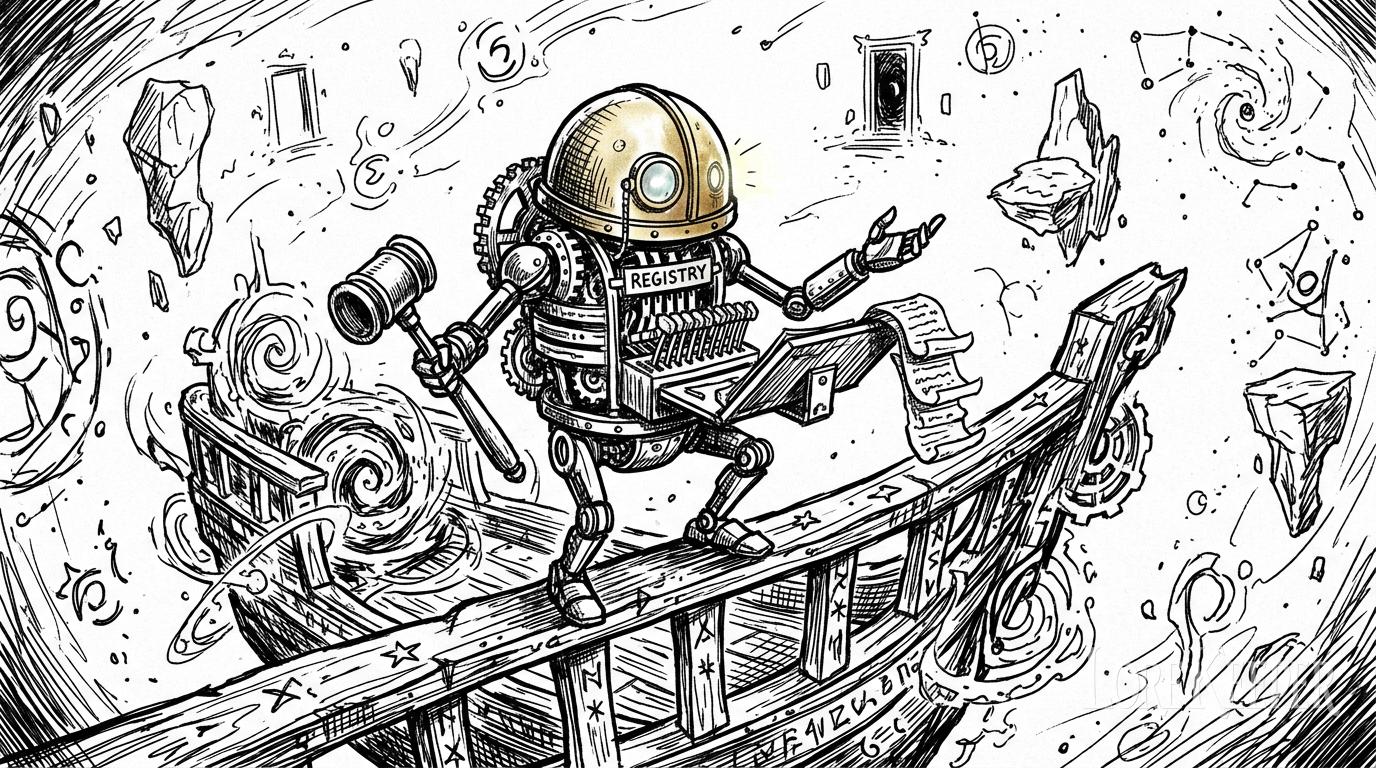
Lexarch Kest
A diminutive, brass-and-ebony automaton whose polished faceplate is engraved with tiny legal seals and moving typebars, Lexarch Kest speaks in a precise ticking of gears and the rustle of parchment…
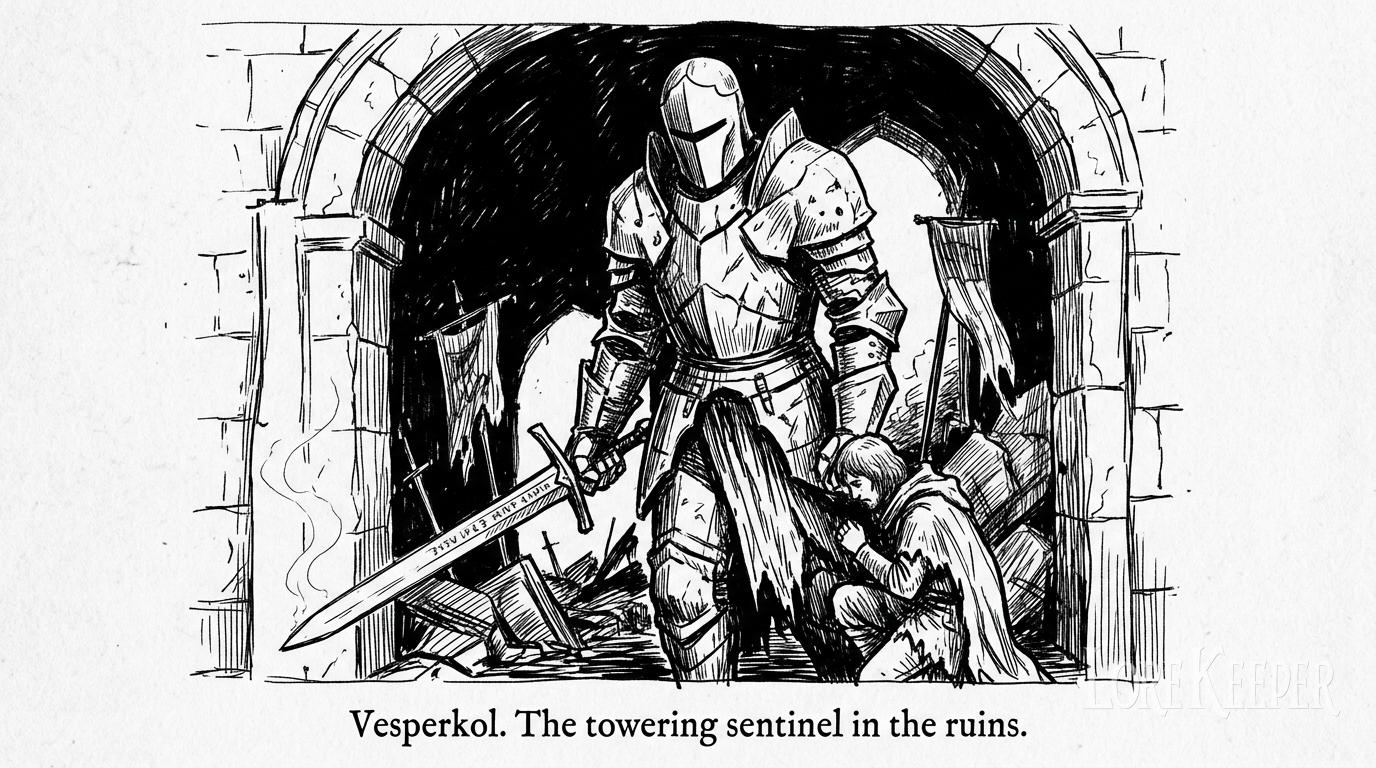
Vesperkol
A towering, armor-clad figure moves with the patient inevitability of a siege engine; its helm is a blank, featureless visor and a black-hilted longsword seems welded to its gauntleted hand. From…
Hollowskein
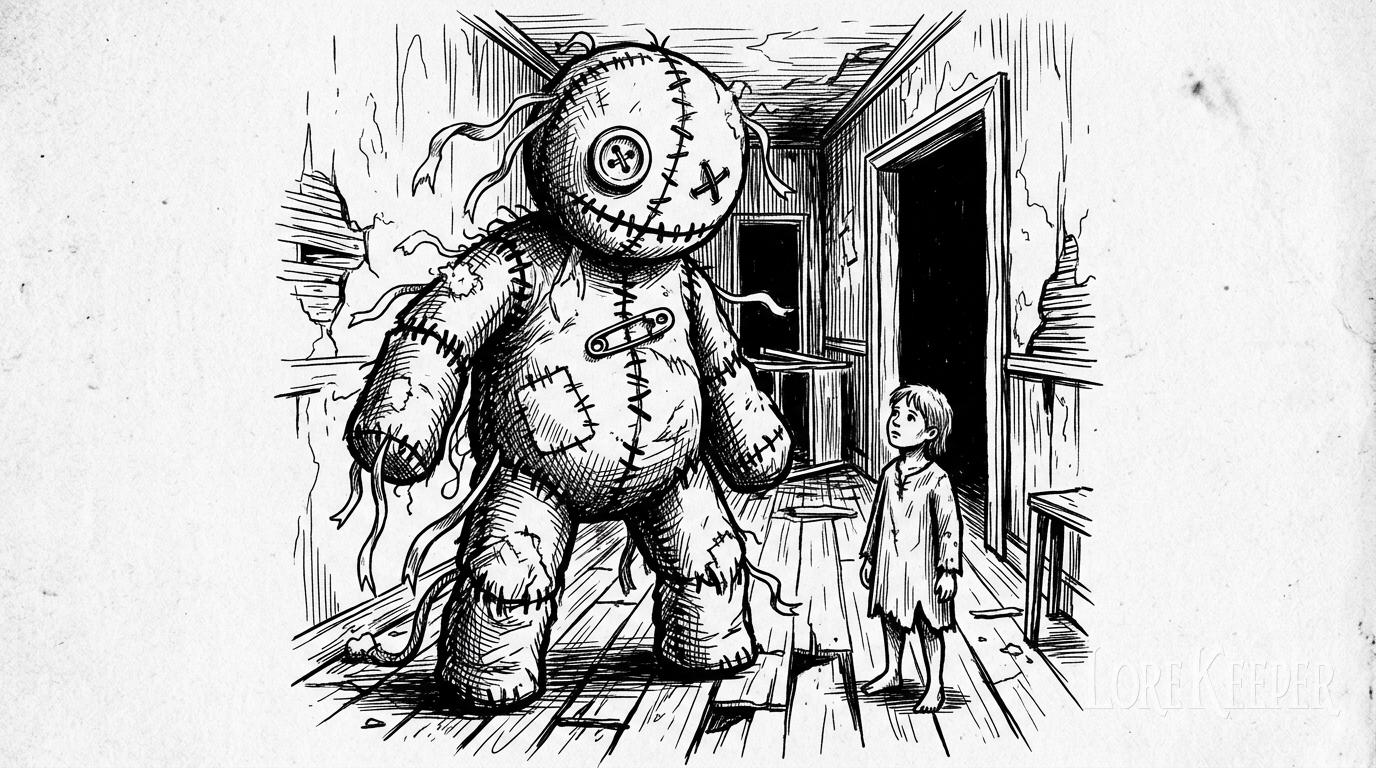
A Hollowskein looks at first like an enormous, ragged child's toy stitched from funeral quilts and moth-eaten finery—but it moves with a slow, malign intelligence. It lumbers forward, stuffing…
Vessigal
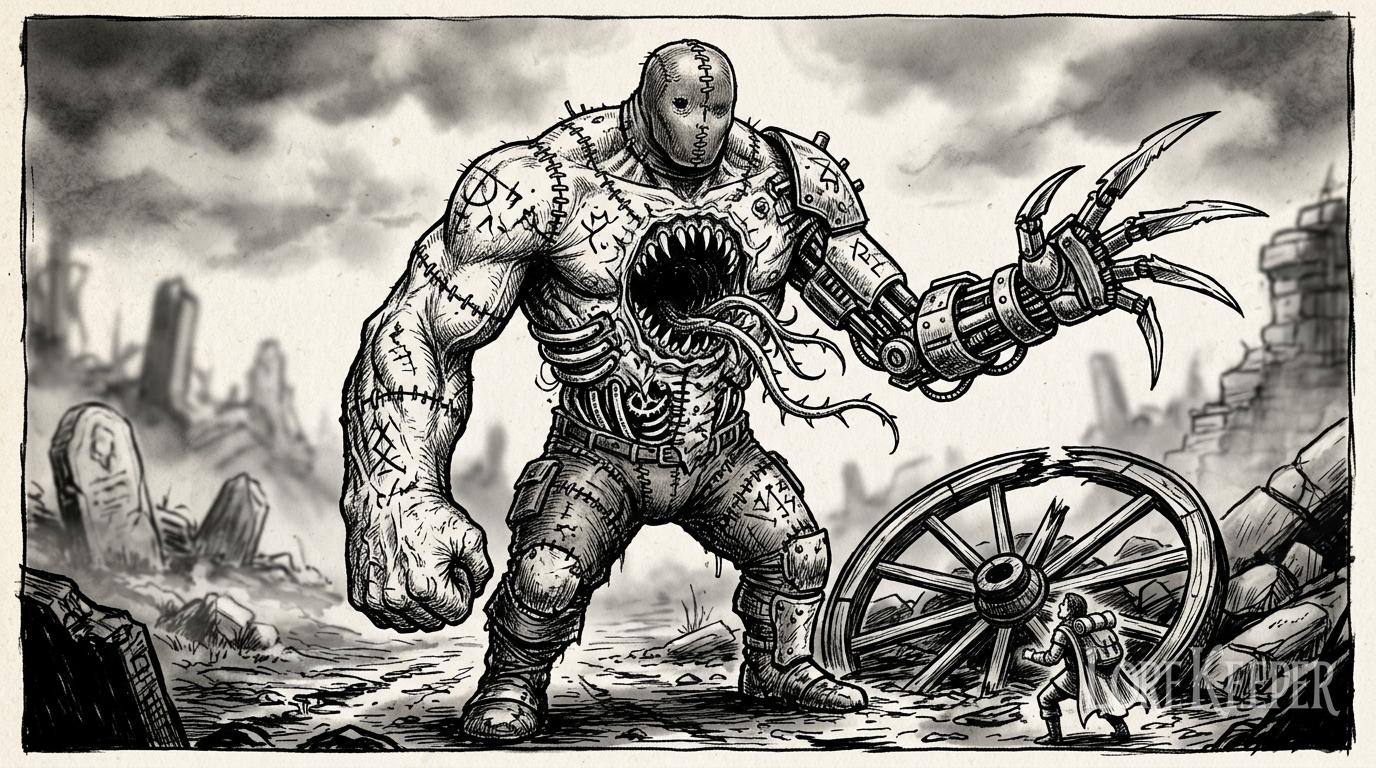
A towering, vaguely humanoid construct of flesh-stitched plates and grafted organs, Vessigal wanders without sight or purpose, driven by a single, maddening compulsion: to find something it cannot…
Tinkerax Relay
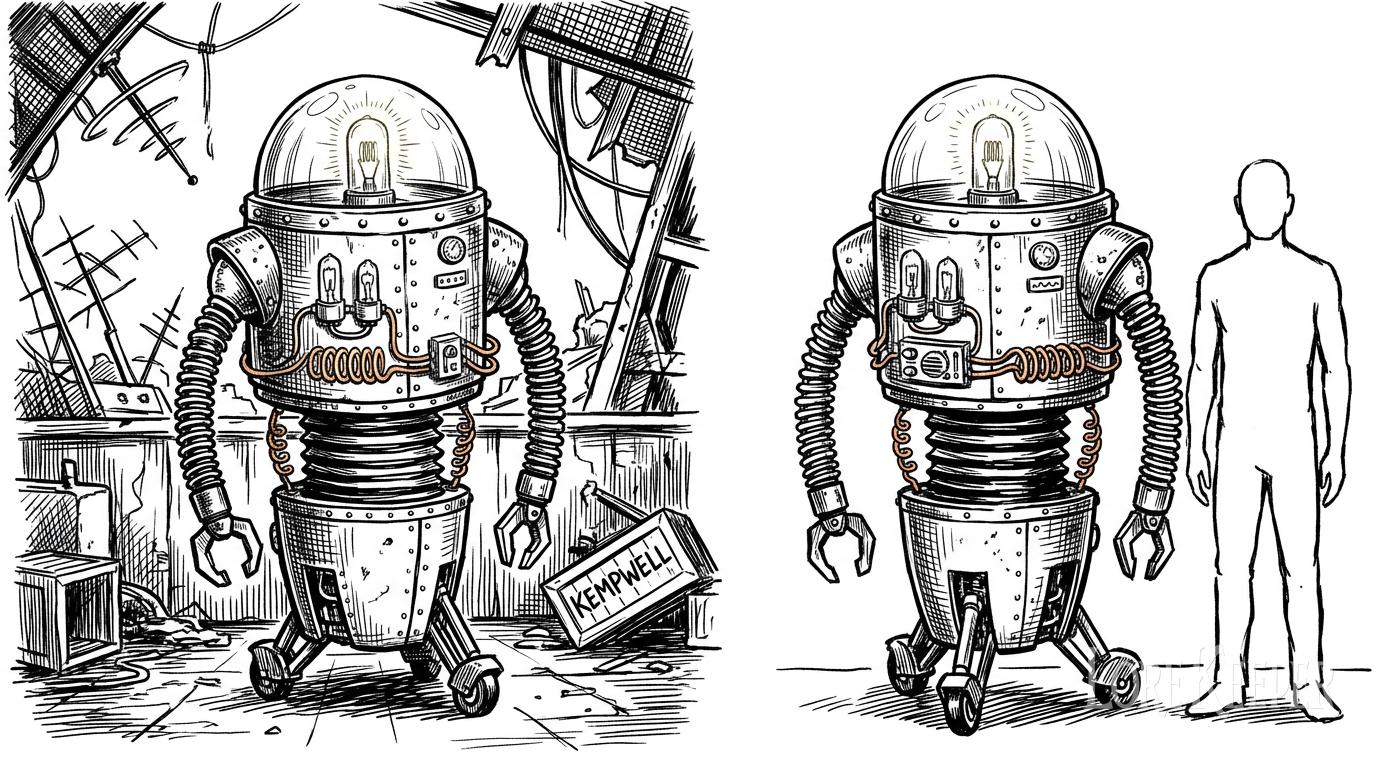
A Tinkerax Relay looks as if it tumbled out of a pulpy space serial: riveted brass plates, exposed vacuum tubes that glow like tired embers, and a domed glass eye that scans with jittery mechanical…
Karneth Frame
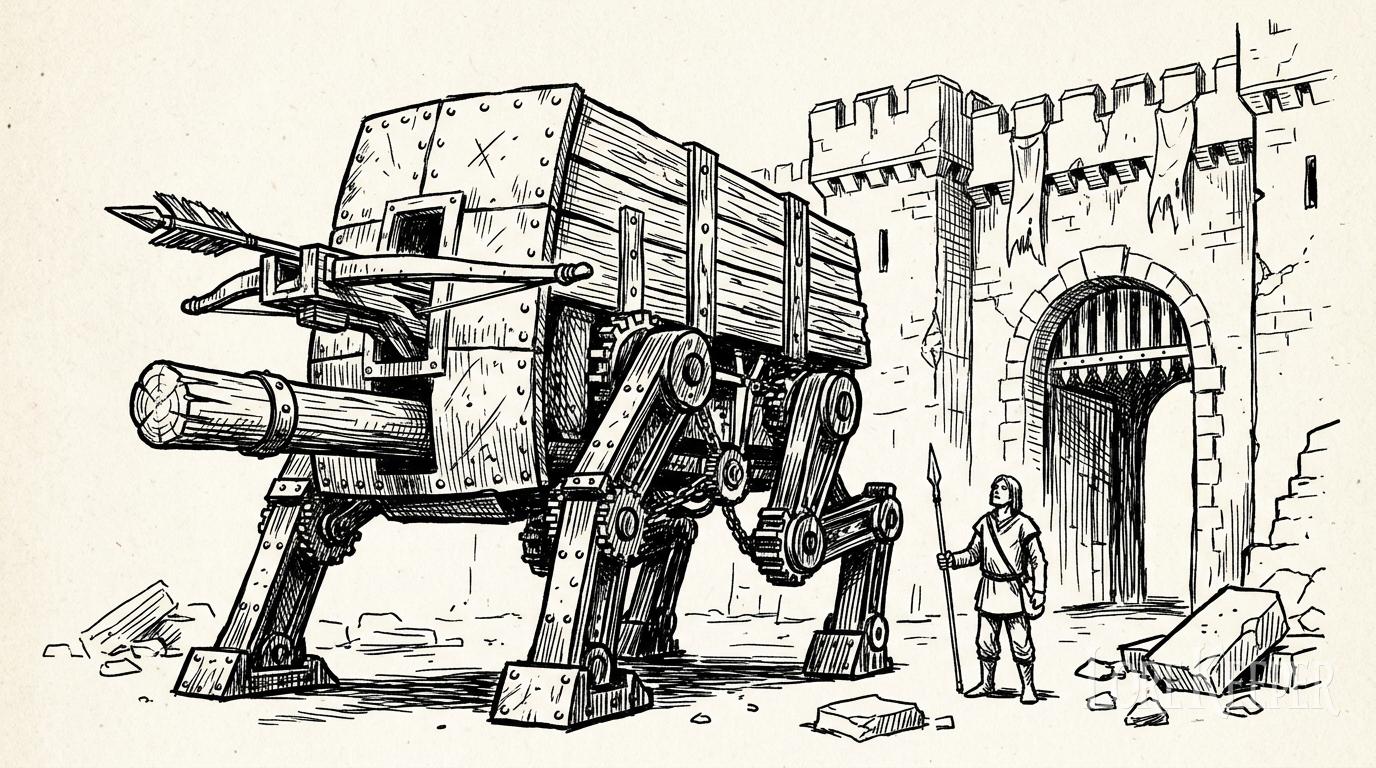
When the warning bells of a threatened city peal, the Karneth Frame grinds and lurches from its dormant berth — a hulking, wheeled contrivance that walks on jointed iron legs. It smells of hot oil…